Software Defined Systems (SDS): The Future of Programmable Space Networks
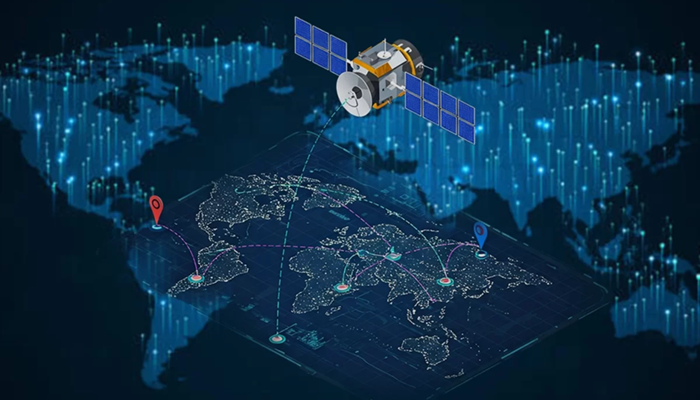
Software Defined Systems (SDS): The Future of Programmable Space Networks Introduction Space is undergoing a profound technological transformation. Traditional satellites were designed as fixed-function systems with predetermined hardware configurations, […]
The Indian Space Industry: Key Highlights from 2025
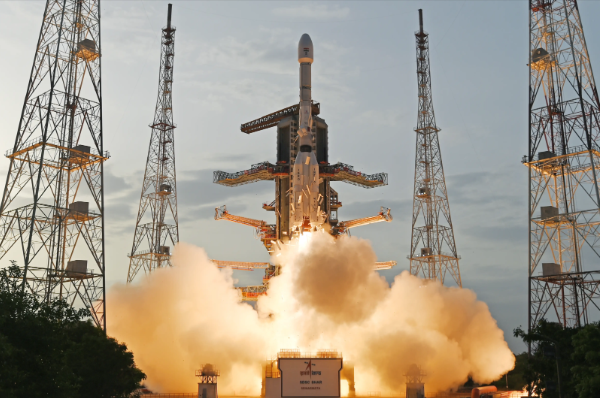
Launch of the GSLV-F16/NISAR Mission (Image Courtesy: ISRO) The Indian Space Industry: Key Highlights from 2025 Abhishek Dubey & Sagnik Sarkar 1. Introduction 2025 has been a year of many positives for the Indian […]
Advancing Circular Economy in the Telecom Sector: Enabling Policy and Practice
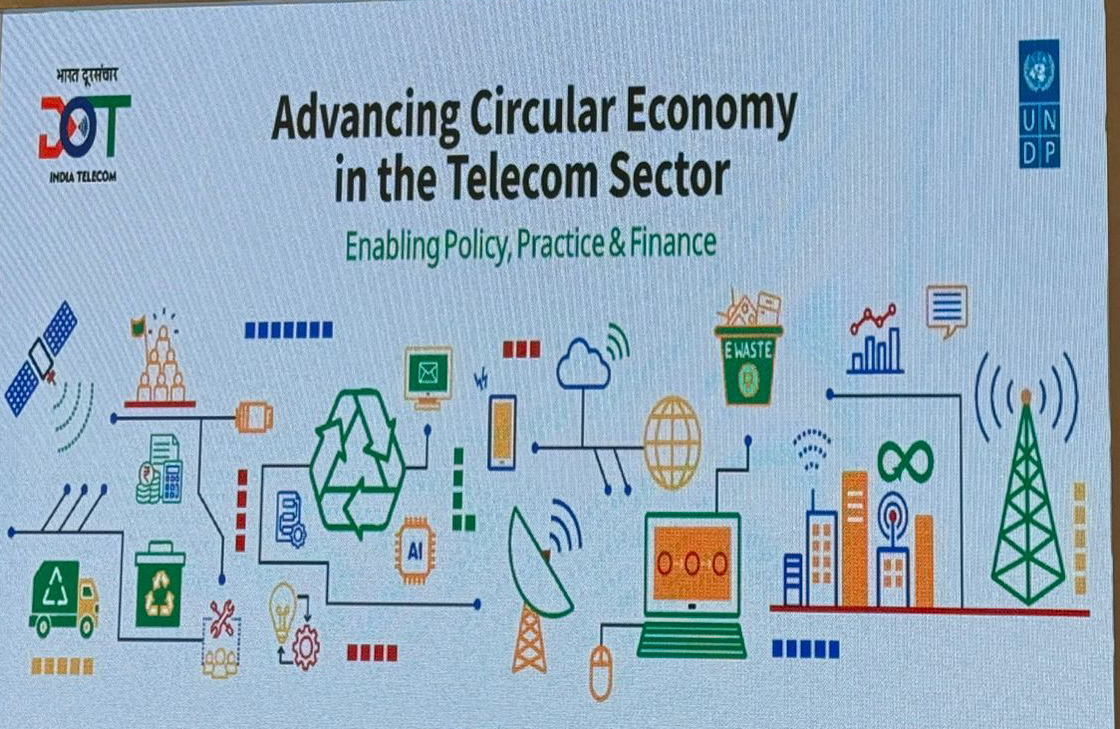
Advancing Circular Economy in India’s Space-Enabled Telecom Ecosystem Every phase of national development leaves behind an infrastructure legacy. For India’s digital era, that legacy is telecommunications. As networks expand to […]
Orbital Stewardship: The Responsibility of New-Age Space Nations in the Post-Kessler Era

Orbital Stewardship: The Responsibility of New-Age Space Nations in the Post-Kessler Era Entering the Post-Kessler Era Earth’s orbital environment is undergoing a fundamental shift. What was once open and forgiving […]
Deepfake Geospatial Imagery: Securing Trust in the Age of Synthetic Earth Observation

AI-generated deepfake satellite imagery challenges the trust once placed in Earth observation data. As India expands its geospatial ecosystem, ensuring authenticity through image forensics, provenance, and governance frameworks is crucial. By leading in verification standards and responsible synthetic data use, India can shape global norms for ethical Earth observation.
The 100 Km conundrum – why the Kármán Line Should be 84 km

If a lower scientifically-based boundary, such as 84 km (rounded to 80/85 km), were adopted, it would provide a rational and logical solution to the problem. It would provide a clear physical parameter for where sovereign airspace ends and outer space begins, whereby outer space is specifically recognised as a global commons under the 1967 Outer Space Treaty and cannot be nationalised or appropriated. The clear limit would remove legal ambiguity altogether and reduce options for disputes over overflight permissions, jurisdiction, and applicability of domestic law concerning suborbital flights.
Enhancing Space Capabilities through Cutting-Edge Solutions

With regenerative payloads, incoming signals are “regenerated” with signal processing techniques and remove the attenuation effects in the uplink before downlinking to user terminals. With work being done by the 3rd Generation Partnership Project (3GPP) on 5G Non-Terrestrial Networks (NTNs), base station functionality is moved onto the satellite, allowing it to be a Distributed Unit (DU) or a full gNB (base station).
For onboard processing, demodulators, decoders, encoders, and modulators are required, often employing custom-designed Application-Specific Integrated Circuits (ASICs). In this regard, deploying regenerative payloads is more rigid and presents long-term adaptability risks, as ASICs are not reprogrammable and require hardware replacement to accommodate different radio protocols, Digital Signal Processing (DSP) algorithms, and even Artificial Intelligence (AI). In this way, software-defined implementations of onboard processing would help Satellite Communications (SatCom) operators overcome some of the challenges inherent in satellite operations.
Navigating Liability(s) through the risks in the Space Sector

The authorization framework as outlined in the Notified Guidelines, which stipulate that any entity, whether the government or non-government entities (now known as “NGE(s)” popularly), conducting space activities within Indian territory or under its jurisdiction, must obtain authorization from IN-SPACe. In addition to Indian entities, foreign entities too can apply for authorization to conduct space activities under the Notified Guidelines, albeit through its Indian subsidiary, joint venture or any other collaboration arrangement recognized by the Indian Government. That said, the authorized representative/dealer of non-Indian entities can also seek IN-SPACe Authorization for certain category of authorizations such as authorization of non-Indian GSO (Geo-Stationary Orbit) and/or NGSO (Non Geo-Stationary Orbit) satellite/constellation to enable provisioning of its capacity in India for communication services, Dissemination of space-based earth observation/Remote Sensing data, et al.
Revolutionizing India’s Aerospace and Defense Sector: Exploring the Impact of FPGA-Based Innovations

The country’s reliance on foreign OEMs has decreased as a result of “Make in India,” which opened the door for the Indian aerospace and defense industry. The Indian Government has committed to invest $10 billion as in incentives and help to boost the development of chip manufacturing in India, indicating that the country has the potential to be a major player in the global semiconductor supply chain. This could make a difference in leveraging the FPGA market in India and also it has created opportunities for local players to share their deep tech knowledge and experience in the OEM space for aerospace and defense.
ISRO Writes a Beautiful POEM
POEM not only exemplifies ingenuity in minimizing space debris but also unlocks new horizons for cost-effective space research. This initiative marks a significant milestone, propelling India to the forefront of sustainable space exploration and offering invaluable opportunities for industry engagement in cutting-edge space experiments.