Click Here to View online version
|
|
|
SIA-India Newsletter – July First Edition
|
|
|
|
|
Launching the Next Era: Innovation, Investment & India's Space Future
|
|
|
Skyroot Aerospace Successfully Launches Vikram-1, Marking India's First Private Orbital Launch
Skyroot Aerospace achieved a historic milestone with the successful maiden flight of Vikram-1 under Mission Aagaman, making it the first privately developed Indian launch vehicle to successfully place payloads into orbit. The landmark mission represents a defining moment for India's NewSpace sector, demonstrating the growing maturity of the country's commercial launch capabilities and indigenous space technologies.
Mission Aagaman carried a diverse range of payloads, showcasing advancements in satellite technologies, in-orbit servicing, international collaboration, and next-generation space applications. The successful launch not only reinforces India's emergence as a competitive commercial launch destination but also highlights the strength of its rapidly expanding private space ecosystem. The achievement marks a major step forward in India's journey towards becoming a leading global spacefaring nation and reflects the growing role of private industry in shaping the future of the country's space economy.
|
|
|
IN-SPACe Unveils SSA Authorisation Guidelines, Strengthening India's Space Safety Framework
|
|
|
|
|
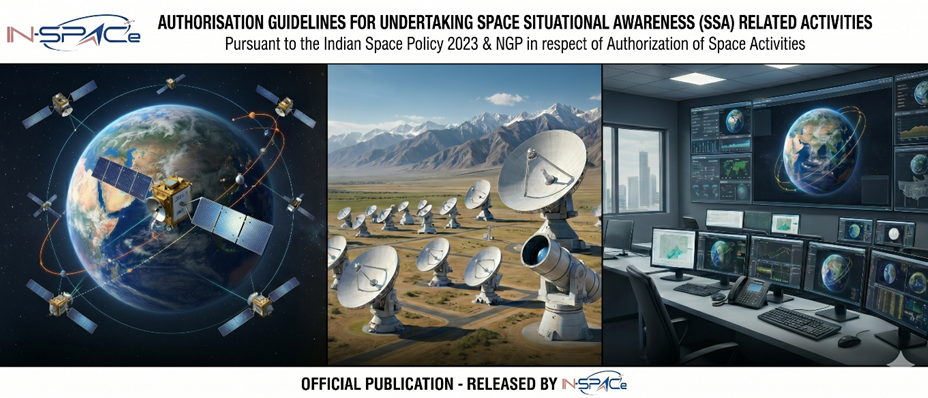
SIA-India welcomes the release of IN-SPACe's Space Situational Awareness (SSA) Authorisation Guidelines, as a significant milestone in India's evolving space regulatory framework. The framework introduces a comprehensive regulatory architecture for commercial SSA activities, covering the authorisation of space- and ground-based sensors, SSA service providers, data governance, cybersecurity, audit and reporting requirements, and international collaborations. It also adopts a risk-based approach to authorisation while recognising commercial SSA as an emerging segment of India's space economy.
Key provisions include a dedicated authorisation framework for commercial SSA activities, integration of collision avoidance, conjunction assessment, debris mitigation, and end-of-life planning across the mission lifecycle, governance mechanisms for commercial SSA data, cybersecurity and compliance requirements, and provisions enabling international collaboration while safeguarding India's strategic interests.
The guidelines provide much-needed regulatory certainty for industry and create a strong foundation for investment in indigenous SSA capabilities, including orbital analytics, debris monitoring, conjunction assessment, and future space traffic management services. Looking ahead, continued stakeholder consultation and implementation-focused refinements—such as clear standard operating procedures, time-bound authorisation processes, interoperable technical standards, and greater clarity on data governance and operational compliance—will be essential to ensuring the framework remains innovation-friendly while upholding national security and long-term space sustainability.
To know more:
|
|
|
TRAI Signals Investment-Oriented Regulatory Framework for Satellite Communications
|
|
|
|
|
Chairman, TRAI, Mr Anil Kumar Lahoti reaffirmed that the regulator's recommendations on satellite communications are designed to promote innovation and investment while ensuring satellite-based services remain affordable and competitive. His remarks reinforce the government's commitment to creating a balanced regulatory environment that supports the growth of India's satellite communications ecosystem.
The Chairman highlighted TRAI's recommendations under the Telecommunications Act, 2023, including the proposed Unified Service Authorisation, which would enable the provision of all telecom services - including satellite-based services - under a single national-level authorisation. He also reiterated TRAI's recommendations for the administrative assignment of spectrum for satellite communication services, proposing an initial five-year assignment (extendable by two years) for NGSO-based services, along with a transparent spectrum usage charge linked to adjusted gross revenue (AGR).
The Chairman's remarks underscore India's continued progress towards establishing a predictable and investment-friendly regulatory framework for satellite communications. As commercial satellite broadband services move closer to deployment, regulatory clarity on service authorisations, spectrum assignment, and licensing will be instrumental in encouraging long-term investment, accelerating infrastructure rollout, and enabling greater participation from both domestic and global operators.
To know more:
|
|
|
Technology and Innovation
|
|
|
|
Axelspace Releases First Images from Next-Generation GRUS-3 Earth Observation Constellation
|
|
|
|
|
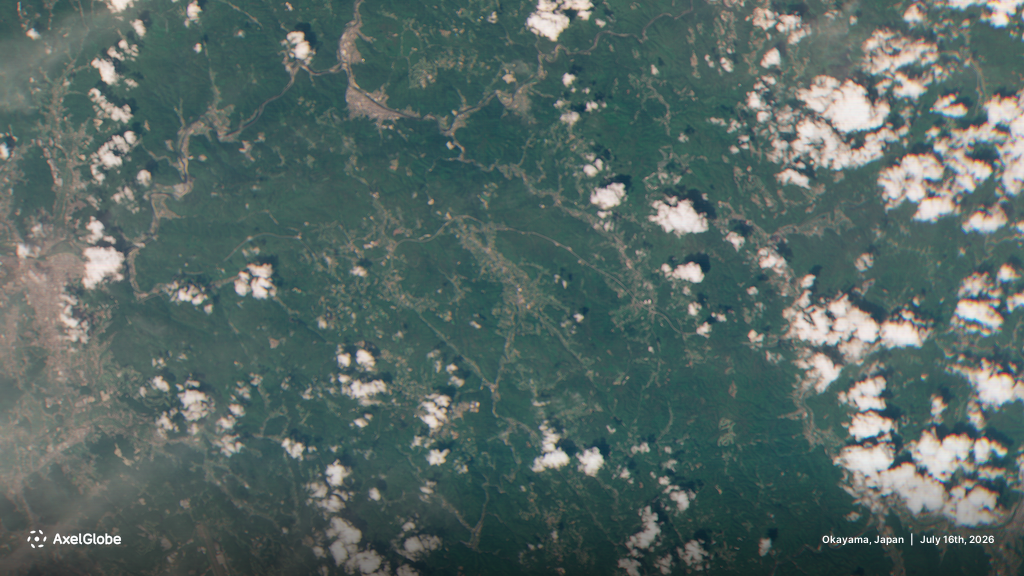
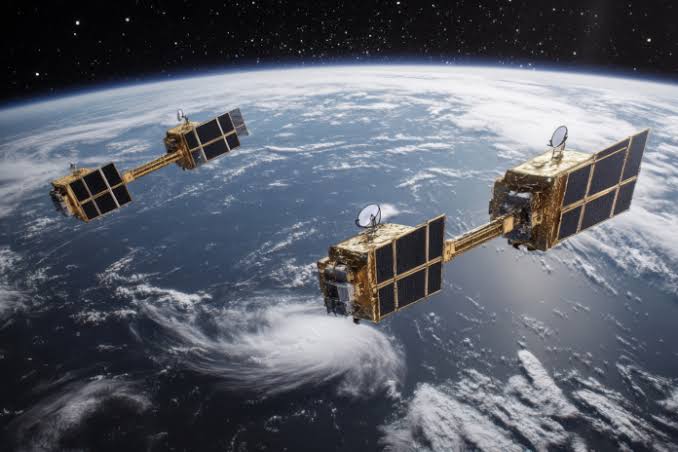
Japanese Earth observation company Axelspace has released the first images captured by its GRUS-3 next-generation Earth observation microsatellites, marking a significant milestone in the deployment of its expanded commercial imaging constellation. The images, acquired during initial in-orbit testing, demonstrate the successful performance of the satellites' optical payloads and onboard systems following their launch earlier this month.
The seven-satellite GRUS-3 constellation is designed to provide high-frequency, wide-area Earth observation with 2.2-metre spatial resolution and daily revisit capability for locations north of 25° latitude. Equipped with a new coastal blue spectral band, the satellites can capture additional information in shallow coastal environments, expanding applications across environmental monitoring, agriculture, maritime domain awareness, disaster management, infrastructure planning, and geospatial intelligence. Once fully operational, the constellation is expected to image up to 2.3 million square kilometres per day, highlighting the continued evolution of commercial Earth observation capabilities.
Read More:
|
|
|
Accelerating India's SpaceTech Startup Ecosystem
|
|
|
|
|
India's private space sector continues to witness strong momentum with initiatives focused on nurturing the next generation of space entrepreneurs. In an exclusive interview with Indian Startup Times, Mr. D.S. Govindarajan, Board Member, SIA-India, and Founding Team Member & Director of KickSky, highlighted the role of KickSky, India's first VC-backed SpaceTech accelerator, in enabling startups to scale through structured mentorship, investor readiness, strategic industry partnerships, and access to global networks. The feature underscores the growing importance of dedicated support mechanisms in accelerating innovation, commercialisation, and investment across India's emerging SpaceTech ecosystem.
To Know More:
|
|
|
SIA-India to Convene Northeast India Space Workshop in Guwahati, Assam
|
|
|
|
|
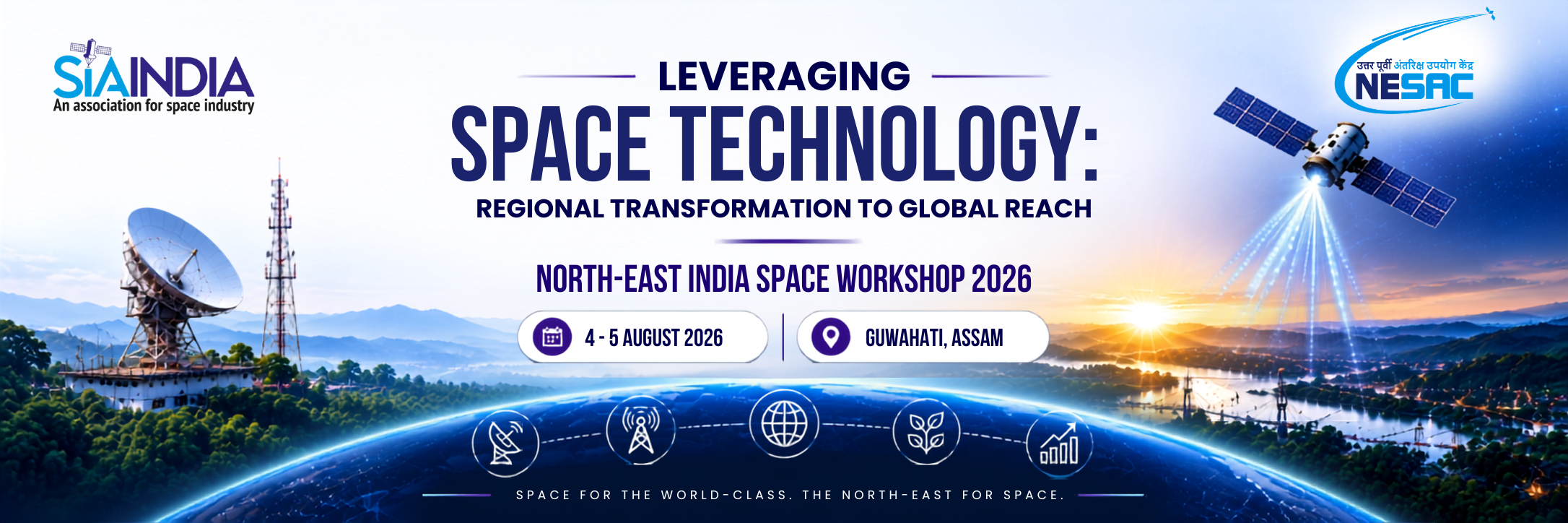
As part of its first major regional initiative, SIA-India, in partnership with the North Eastern Space Applications Centre (NESAC), will convene the Northeast India Space Workshop in Guwahati, Assam, under the theme "Leveraging Space Technology: Regional Transformation to Global Reach." The tentative dates for the event is “25th August 2025”, subjected to finalisation.
The workshop seeks to position Northeast India as an emerging frontier in India's space ecosystem by highlighting the region's potential as a hub for space-enabled applications, downstream innovation, entrepreneurship, research, and technology-driven development. With its strategic location, unique geographical characteristics, and growing innovation ecosystem, the Northeast presents significant opportunities to leverage space technologies for sustainable development while contributing to India's expanding space economy.
Bringing together policymakers, government agencies, defence and strategic stakeholders, industry leaders, startups, academia, investors, and international partners, the workshop will serve as an action-oriented platform to foster collaboration, catalyse investment, and identify practical pathways for the adoption of space technologies across sectors. Beyond exploring how space can accelerate regional development, the initiative aims to demonstrate how Northeast India can play a pivotal role in shaping the next phase of India's space journey. It is the beginning of a long-term commitment to building regional space ecosystems and ensuring that India's space future is shaped not only nationally, but regionally.
|
|
|
Deloitte Joins Northeast India Space Workshop 2026 as Knowledge Partner
|
|
|
|
|
SIA-India is pleased to welcome Deloitte as the Knowledge Partner for the Northeast India Space Workshop 2026, reinforcing the workshop's commitment to fostering informed dialogue and strategic collaboration across India's evolving space ecosystem.
Organised by SIA-India in partnership with the North Eastern Space Applications Centre (NESAC), the workshop will bring together policymakers, government agencies, industry leaders, startups, academia, investors, and international partners to explore how space technologies can drive regional transformation and unlock new opportunities for innovation and economic growth. As Knowledge Partner, Deloitte will contribute its expertise in strategy, digital transformation, and emerging technologies to support discussions on strengthening the Northeast's role in India's expanding space economy.
|
|
|
Conference on Payloads, Sensors & AI Highlights Emerging Space Technologies
|
|
|
|
|
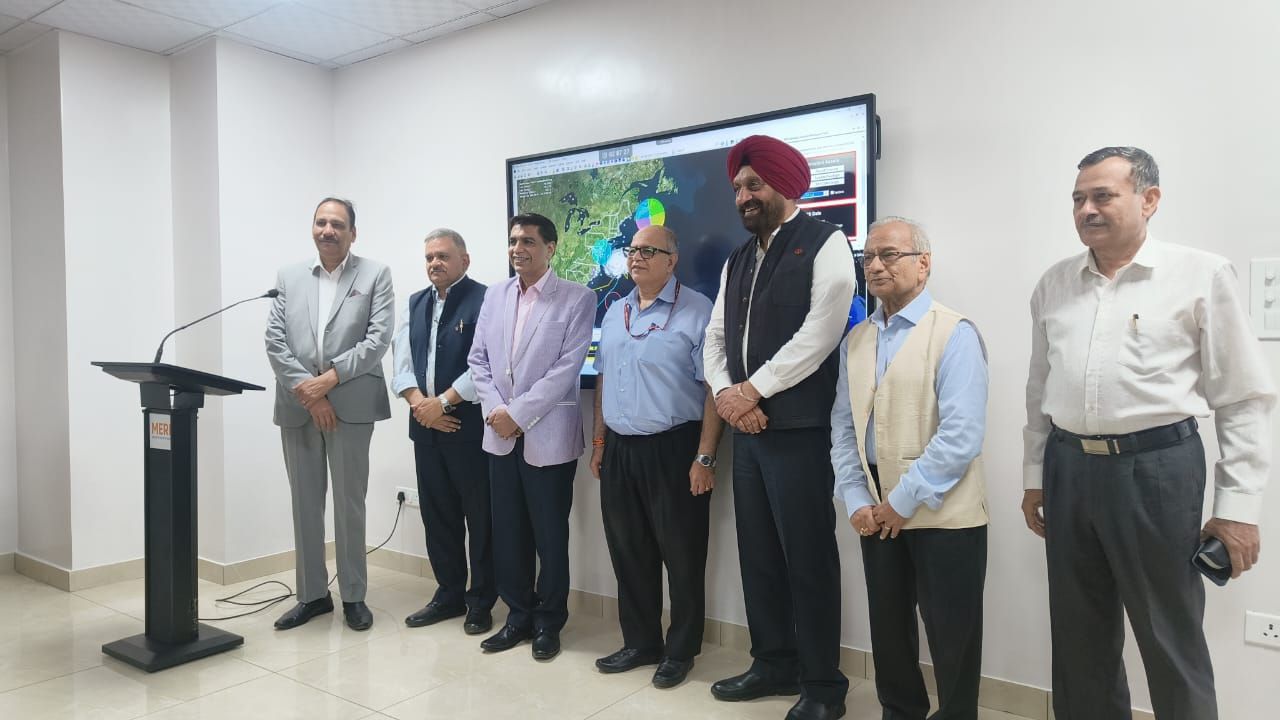
SIA-India, in collaboration with the MERI Group of Institutions – Department of Space Studies, successfully organised a conference on "Payloads, Sensors & AI: Multi-Orbital Complexities," bringing together experts from government, industry, academia, and the research community to discuss the evolving role of advanced technologies in the space sector.
A key highlight of the event was the launch of GeoAI – Transforming Spatial Intelligence for Sustainable Development, Smart Governance & Military Applications, alongside the inauguration of the Software-Defined Satellite Laboratory. These initiatives underscore the growing importance of artificial intelligence, geospatial intelligence, and software-defined satellite technologies in advancing innovation, research, and capability development. The conference reaffirmed the value of academia-industry collaboration in nurturing talent and strengthening India's rapidly expanding space ecosystem.
|
|
|
Industry Leaders Deliberate on the Future of India's SATCOM Ecosystem
|
|
|
|
|
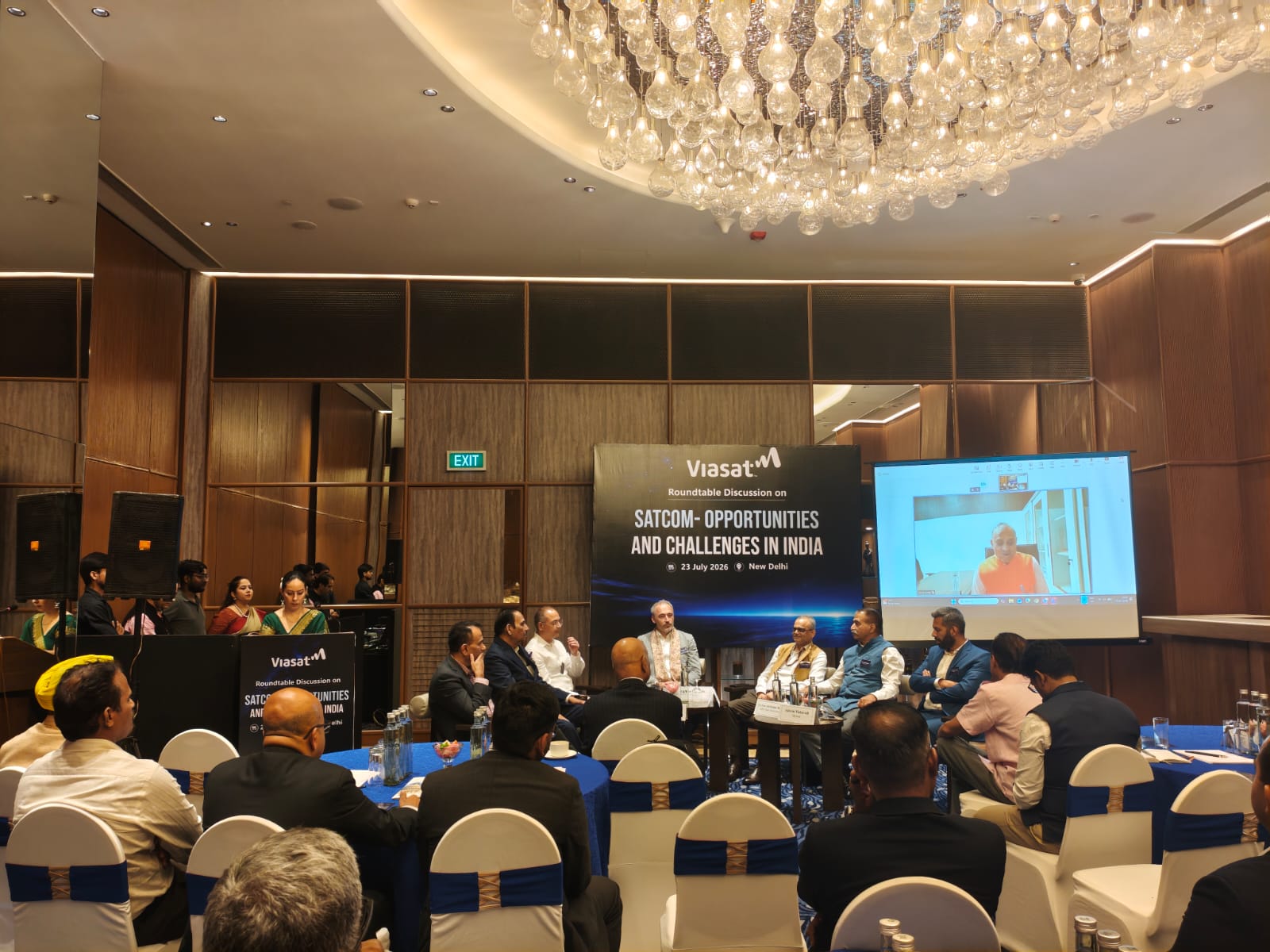
SIA-India Director General Anil Prakash participated as a distinguished panellist at the Roundtable Discussion on "SATCOM – Opportunities and Challenges in India," organised by Viasat. The discussion brought together policymakers, industry leaders, and ecosystem stakeholders to examine the evolving satellite communications landscape and the opportunities it presents for India's digital future.
The roundtable focused on strengthening the policy and regulatory framework for satellite communications, expanding broadband and enterprise connectivity, enhancing disaster resilience and mobility services, addressing spectrum and infrastructure challenges, and fostering greater collaboration between government and industry. Discussions also highlighted the importance of building a skilled workforce and creating an investment-friendly environment to accelerate SATCOM adoption and position India as a globally competitive hub for satellite communications.
|
|
|
Reusable Launch Vehicles: Charting India's Next Leap in Space Transportation
|
|
|
|
|
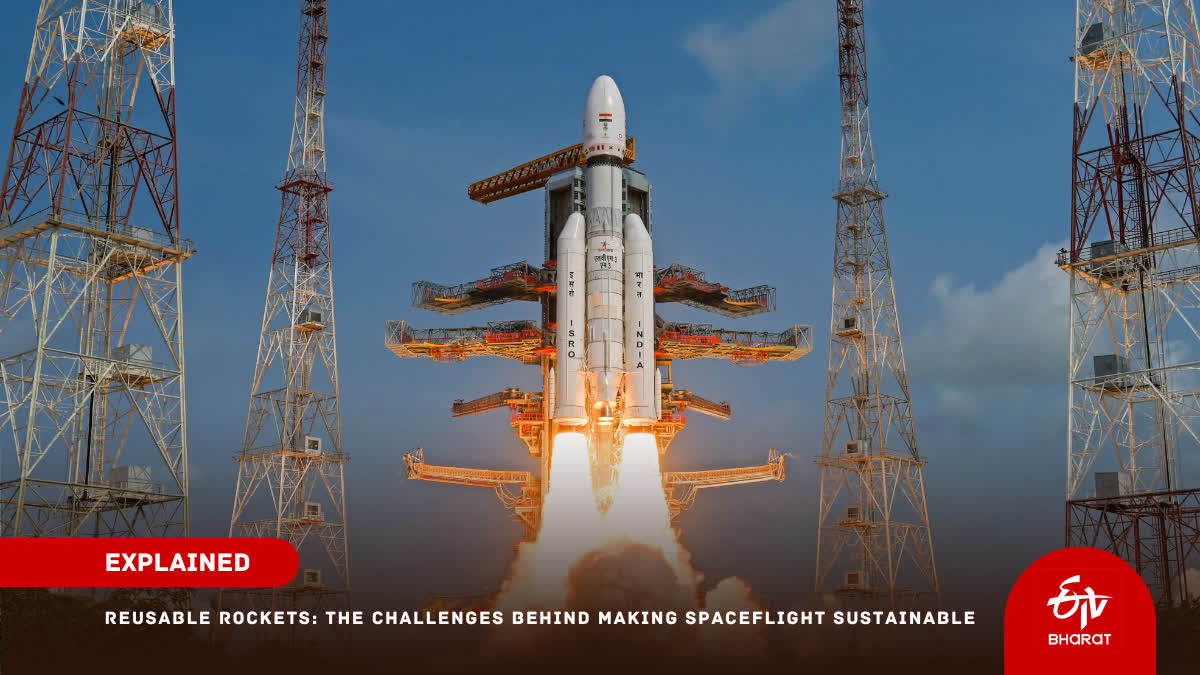
In an interview with ETV Bharat, D.S. Govindarajan, Director, Centre of Excellence (CoE) for Space Tech Foundation, Bengaluru, established by SIA-India in collaboration with Government of Karnataka, shared insights into the technological and operational roadmap for India's reusable launch vehicles (RLVs). The discussion highlighted how reusability has the potential to transform space transportation by significantly reducing launch costs, increasing mission frequency, and enabling more sustainable access to space.
The interview examines the engineering challenges associated with reusable launch systems, including the balance between payload capacity and recovery mechanisms, the role of advanced propulsion technologies, lightweight materials, onboard automation, and thermal protection systems. It also highlights the importance of ISRO's semi-cryogenic engine programme and future LOX–methane propulsion in supporting the development of India's Next Generation Launch Vehicle (NGLV).
"The real measure of success for the NGLV will not be a single successful landing, but whether the booster can fly repeatedly with minimal component replacement and predictable maintenance costs." — D.S. Govindarajan
Emphasising that the true success of reusable launch systems lies in rapid turnaround and reliable repeatability, the discussion offers valuable perspectives on India's journey towards building globally competitive launch capabilities.
Read the full interview:
|
|
|
DeepTech Funding Gains Momentum with Strong Support for India's Space Sector
|
|
|
|
|
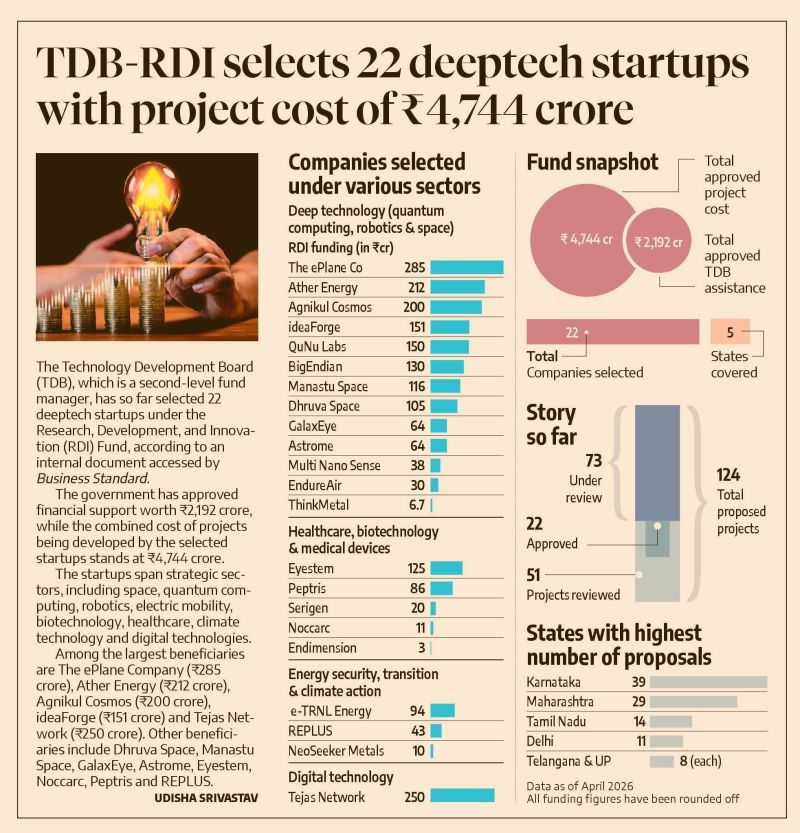
Several SIA-India member companies have been selected for support under the Government of India's Research, Development and Innovation (RDI) Fund, managed by the Technology Development Board (TDB). The initiative aims to accelerate the commercialisation of indigenous deep technologies across strategic sectors, including space, robotics, quantum technologies, biotechnology, healthcare, climate technology, and advanced mobility.
Among the selected beneficiaries are Agnikul Cosmos, Dhruva Space, Manastu Space, GalaxEye, and several other leading Indian deeptech companies. According to reports, the TDB has approved financial support for 22 startups, with a combined project outlay of approximately ₹4,744 crore and government support amounting to ₹2,192 crore.
The selection of multiple space companies highlights the growing strength of India's private space ecosystem and reflects increasing institutional confidence in indigenous SpaceTech innovation. The funding is expected to accelerate research and development, strengthen advanced manufacturing capabilities, support commercialisation of cutting-edge technologies, and further enhance India's competitiveness in the global deeptech and space economy.
|
|
|
Dhruva Space Strengthens Growth with ₹60 Crore AVCF Investment and Strategic Partnership with MAHE
|
|
|
|
|
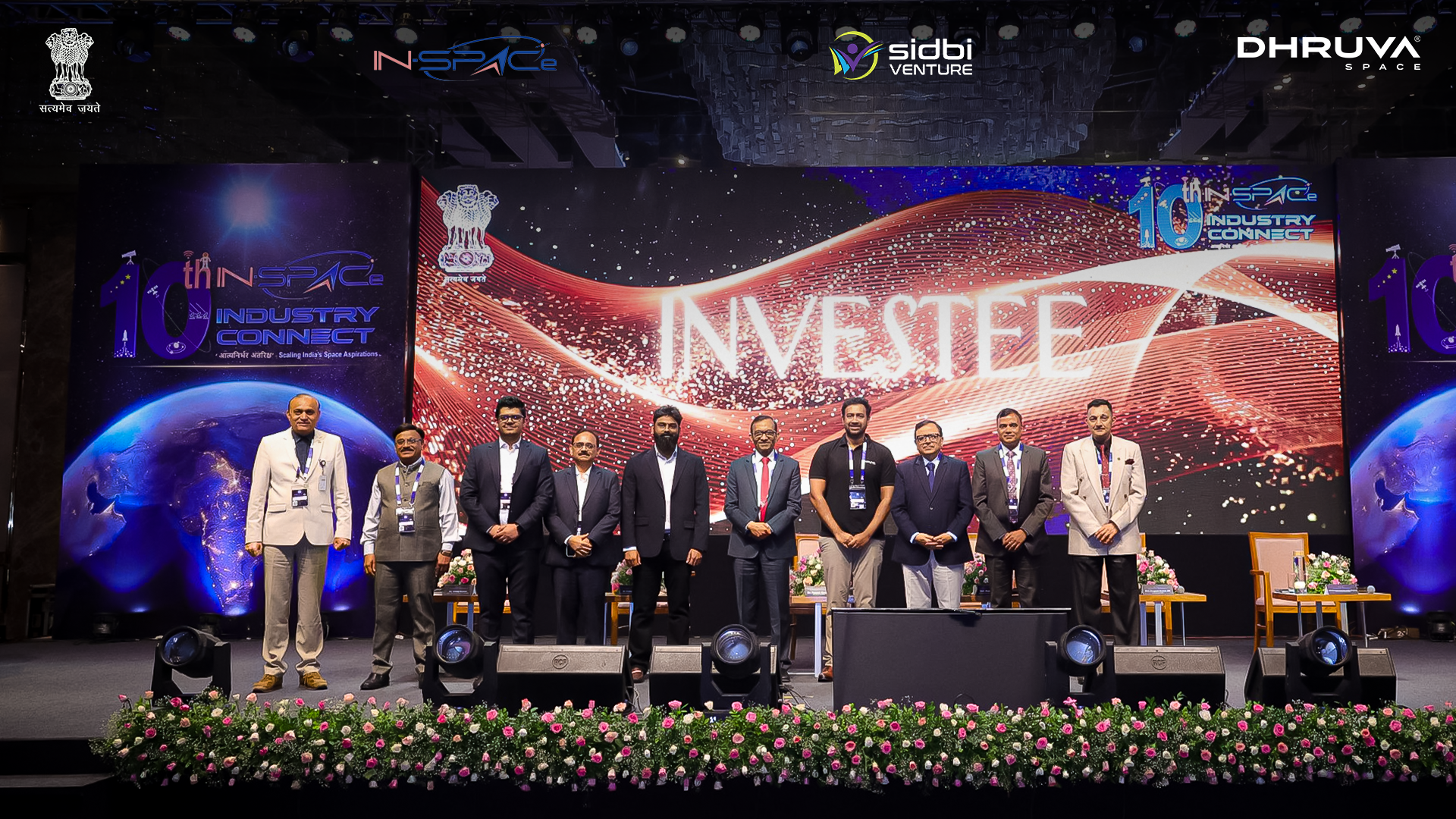
SIA-India member Dhruva Space has marked two significant milestones in India's NewSpace ecosystem. The company became the first recipient of a ₹60 crore investment under the ₹1,600 crore Antariksh Venture Capital Fund (AVCF)—India's sovereign SpaceTech fund anchored by IN-SPACe and managed by SIDBI Venture Capital Limited. The investment will support Dhruva Space's ongoing efforts to expand sovereign spacecraft manufacturing capabilities, accelerate product development, strengthen space infrastructure, and scale commercial operations.
In parallel, Dhruva Space has entered into a strategic partnership with the Manipal Academy of Higher Education (MAHE) to establish the Advanced Space Technology, Research and Education Network (ASCENT). The initiative aims to create an integrated ecosystem for next-generation space research, talent development, and technology innovation by bringing together academia and industry. Through collaborative research, specialised training programmes, and the co-development of advanced space technologies, ASCENT seeks to nurture a future-ready workforce while accelerating indigenous innovation in critical space domains.
Read More:
|
|
|
Cosmicport Achieves Successful Cryogenic Methalox Engine Ignition Under Mission Blue Frost
|
|
|
|
|
Cosmicport has successfully completed the first cryogenic ignition trial under Mission Blue Frost, marking a key milestone in the development of indigenous propulsion technologies for India's private space sector. The test demonstrated the successful ignition of a 99.97% pure methane and liquid oxygen (Methalox) engine, validating an important step towards next-generation launch vehicle propulsion.
Methalox propulsion is increasingly being adopted globally for its high performance, reusability, and cleaner combustion characteristics, making it a preferred choice for future launch systems. Cosmicport's achievement strengthens India's growing capabilities in advanced propulsion technologies and reflects the continued progress of the country's NewSpace ecosystem in developing indigenous, globally competitive launch solutions.
To watch testing video:
|
|
|
New Reports and Publications
|
|
|
|
Stellar Conversation | Reimagining Space Infrastructure Through Software-Defined Systems
|
|
|
|
|
SIA-India's latest Stellar Conversation features an insightful article by Lt Gen PJS Pannu, PVSM, AVSM, VSM (Retd.), former Deputy Chief of the Integrated Defence Staff and Senior Advisor, SIA-India, titled "Software Defined Systems (SDS): The Future of Programmable Space Networks."
The article examines how software-defined systems are transforming the future of space infrastructure by enabling satellites and space networks to be reconfigured, upgraded, and optimised through software rather than hardware. It highlights the growing importance of programmable architectures, AI-enabled autonomy, and adaptive mission capabilities in enhancing operational flexibility, resilience, and decision superiority across both commercial and defence space domains. As the global space sector moves towards intelligent, software-driven networks, the article underscores the need for India to build indigenous capabilities and a robust industrial ecosystem to remain competitive in the next generation of space technologies.
read the full article:
|
|
|
|
|
"For decades, India has earned global acclaim for its launch vehicle capabilities through ISRO's remarkable achievements. Today, with the successful orbital launch of Vikram-1, we are witnessing the dawn of a new chapter in India's space journey—one where the private sector is building upon that legacy and demonstrating world-class capabilities in launch vehicle development.
We extend our heartfelt congratulations to Skyroot Aerospace, a valued member of SIA-India, on achieving this historic milestone. This mission is not merely a technological accomplishment; it is a defining moment for India's commercial space sector. It reflects the growing maturity, confidence, and innovation of our private space ecosystem and reinforces India's emergence as a globally competitive destination for space technology, innovation, and commercial launch services."
|
Mr Anil Prakash
Director General, SIA-India
|
|
|
|
|
India Drafts Space Traffic Safety Rules to Strengthen Orbital Sustainability
|
India is developing a Space Situational Awareness (SSA) policy to improve the tracking and management of satellites amid growing orbital congestion. The proposed framework will make SSA compliance mandatory for most space activities, enhancing collision avoidance, space safety, and supporting India's expanding role in the rapidly growing global space traffic management market.
|
|
|
Other National and International News
|
|
|
|
|
|
Private Space Investment in India Crosses $618 Million, Strengthening NewSpace Growth
|
India's private space sector has attracted over $618 million in investments, with 17 startups authorised by IN-SPACe to undertake space activities. The government highlighted rapid growth in private participation, expanding startup activity, and a strengthened regulatory framework to promote innovation while ensuring national security and safe commercial space operations.
|
|
|
|
|
Amazon Leo Unveils Plans for 5,105-Satellite Direct-to-Device Constellation
|
Amazon has filed an FCC application to deploy 5,105 Low Earth Orbit (LEO) satellites for a Direct-to-Device (D2D) network that will connect smartphones directly from space. Planned for deployment from 2028, the constellation will support voice, messaging, broadband, emergency services, and IoT connectivity, strengthening global mobile coverage through partnerships with telecom operators.
|
|
|
|
|
Debate Grows Over ISRO's Capacity Amid Expanding Space Responsibilities
|
The International Space Station (ISS) is preparing for its final descent, marking the conclusion of decades of global scientific collaboration. Plans are underway for a controlled re-entry into the Pacific Ocean, shifting the focus toward commercial space stations and deep-space exploration.
|
|
|
|
|
Satellite Data Emerges as a Strategic Tool for India's Credit Ecosystem
|
A recent analysis highlights how satellite imagery is transforming financial services by enabling smarter credit assessment and agricultural lending. India's Unified Lending Interface (ULI) integrates Earth observation data into loan evaluation, creating new commercial opportunities for the space sector while strengthening economic planning, financial inclusion, and demand for domestic satellite capabilities.
|
|
|
|
|
|
|
|
|
|
For further information, please contact us at:
|
|
|
|
|
|
|
|
|
|
|