Click Here to View online version
|
|
|
SIA-India Newsletter – January 2026 First Edition
|
|
|
SIA-India Convened Strategic Group to Shape Defence–Space Discourse Ahead of DefSat 2026 & IndSpaceX 4.0
|
|
|
|
|
SIA-India convened the Strategic Group as a focused, high-level platform to deepen dialogue on defence, space, and emerging technologies at a time when the character of security and warfare was undergoing a fundamental transformation. The Strategic Group meeting formed part of a structured precursor process leading up to DefSat 2026 and IndSpaceX4.0, scheduled to be held from 24–26 February 2026. In the run-up to DefSat 2026, SIA-India, in collaboration with key stakeholders, had already convened two DefSat Precursor Roundtables, followed by an Industry Orientation Meet, to progressively shape the strategic, operational, and industry-led agenda for the conference.
Building on the insights and priorities that emerged from these engagements, the Meeting of the Space Strategic Group was convened as a focused, closed-door strategic dialogue at Management Education and Research Institute (MERI) Group. The deliberations were aimed at moving beyond high-level exchanges towards scenario-driven thinking and actionable strategic constructs, with discussions centred on military space capabilities, evolving warfare paradigms, the international ramifications of space conflict, and the development of structured space wargaming frameworks. The Group is positioned as a mechanism to ensure that discussions at DefSat 2026 would be informed, outcome-oriented, and grounded in practical execution, supporting India’s pursuit of credible and self-reliant defence space capabilities.
Read the submissions:
|
|
|
SIA-India welcomes Viasat as a valued partner for DefSat 2026, strengthening global industry engagement in defence and space dialogue
|
|
|
|
|
SIA-India convened the Strategic Group as a focused, high-level platform to deepen dialogue on defence, space, and emerging technologies at a time when the character of security and warfare was undergoing a fundamental transformation. The Strategic Group meeting formed part of a structured precursor process leading up to DefSat 2026 and IndSpaceX4.0, scheduled to be held from 24–26 February 2026. In the run-up to DefSat 2026, SIA-India, in collaboration with key stakeholders, had already convened two DefSat Precursor Roundtables, followed by an Industry Orientation Meet, to progressively shape the strategic, operational, and industry-led agenda for the conference.
Building on the insights and priorities that emerged from these engagements, the Meeting of the Space Strategic Group was convened as a focused, closed-door strategic dialogue at Management Education and Research Institute (MERI) Group. The deliberations were aimed at moving beyond high-level exchanges towards scenario-driven thinking and actionable strategic constructs, with discussions centred on military space capabilities, evolving warfare paradigms, the international ramifications of space conflict, and the development of structured space wargaming frameworks. The Group is positioned as a mechanism to ensure that discussions at DefSat 2026 would be informed, outcome-oriented, and grounded in practical execution, supporting India’s pursuit of credible and self-reliant defence space capabilities.
Read the submissions:
|
|
|
SIA-India advocates for protection of X-Band through an Engagement with IN-SPACe on WRC-27 Agenda Item 1.7
|
|
|
|
|
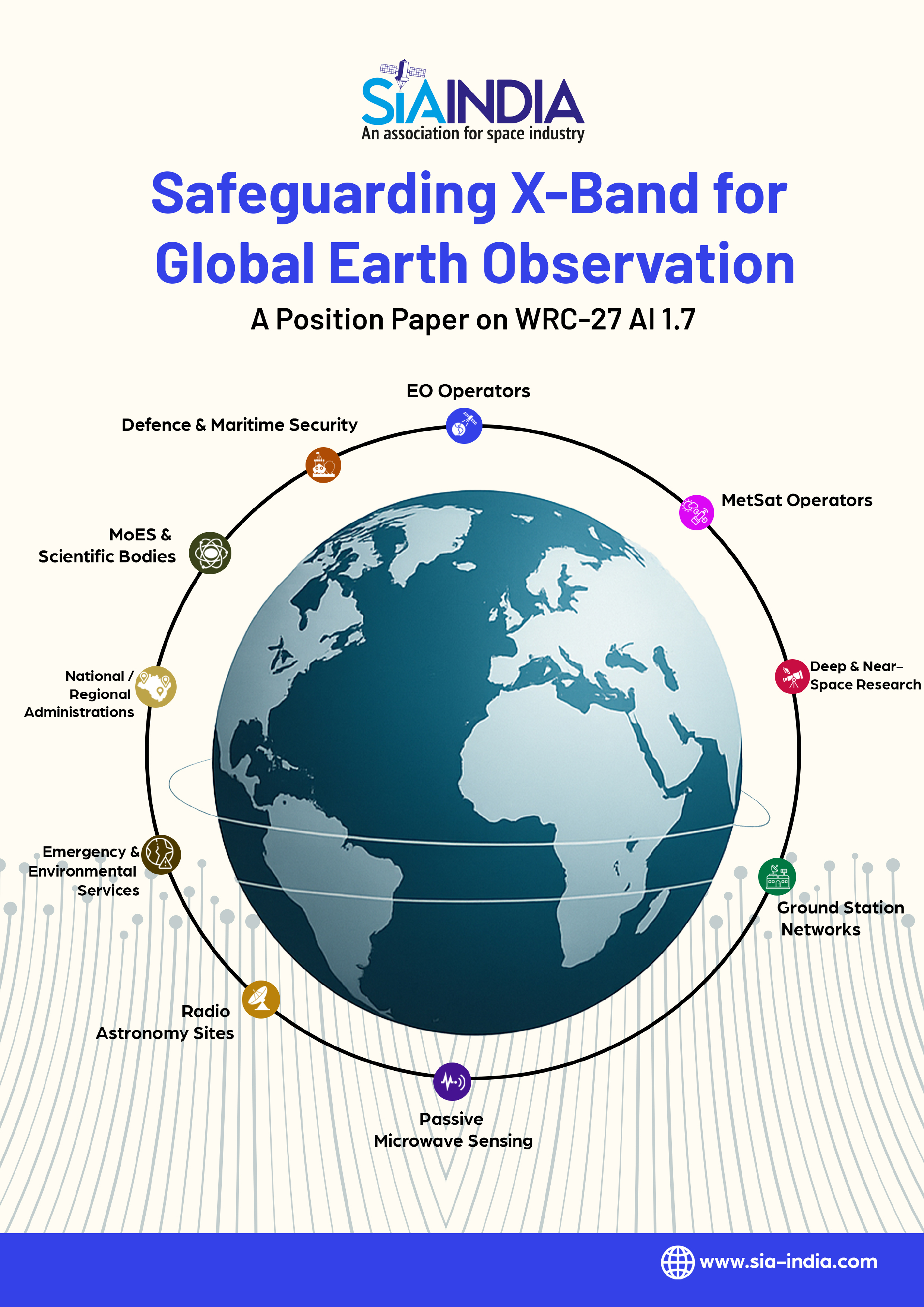
As part of its sustained policy engagement on global spectrum governance, SIA-India continues to actively participate in national and international preparatory discussions related to WRC-27 Agenda Item 1.7, which examines potential allocations for International Mobile Telecommunications (IMT) in the 4 400–4 800 MHz, 7 125–8 400 MHz (or parts thereof), and 14.8–15.35 GHz frequency bands, in line with Resolution 256 (WRC-23). SIA-India has consistently highlighted that any possible IMT identification in the 7 125–8 400 MHz band could have significant implications for incumbent Earth Exploration Satellite Service (EESS) and Radio Astronomy Service (RAS) operations, which are critical for earth observation, meteorology, scientific research, planetary exploration, and deep-space missions.
These concerns were formally articulated in SIA-India’s earlier X-band position paper, which detailed the technical incompatibilities, national strategic dependencies, and long-term scientific risks associated with potential IMT encroachment into bands used by space-based sensing and research services. In continuation of this effort, SIA-India held an online interaction with IN-SPACe on 6 January 2026, during which the current position of the Indian administration on Agenda Item 1.7 was discussed. During the interaction, SIA-India reiterated the need to protect X-band spectrum for EESS operations, drawing upon the technical analysis and recommendations outlined in its position paper.
Read the Position Paper :
|
|
|
DoT Notifies NFAP-2025, Strengthening Spectrum Harmonisation for Telecom and Satellite Services
|
|
|
|
|
The Department of Telecommunications has released the National Frequency Allocation Plan 2025 (NFAP-2025), which aligns India’s spectrum allocation framework with the ITU Radio Regulations, reinforcing global harmonisation while supporting the evolving requirements of digital connectivity and satellite communications.
NFAP-2025 introduces several notable updates aimed at enabling next-generation terrestrial and space-based services. Key among these is the new identification of the 6425–7125 MHz band for IMT networks, with clearly defined coexistence conditions to protect incumbent satellite operations at designated locations. The plan also expands allocations in the Ka, Q, and V bands to support high-throughput GSO systems as well as large non-GSO (LEO/MEO) satellite constellations, reflecting the growing role of satellite broadband in national connectivity.
The revised framework further strengthens spectrum provisions for In-Flight and Maritime Connectivity (IFMC), enabling seamless broadband access for aircraft, ships, and land transport platforms. In addition, NFAP-2025 introduces provisions to support Vehicle-to-Everything (V2X) communications and advanced broadband use cases, aligning spectrum policy with emerging mobility and intelligent transport systems. NFAP-2025 clarifies critical regulatory conditions through updated national footnotes, including provisions governing IMT–satellite coexistence in the 6 GHz band, the use of 37.5–40 GHz and 42.5–43.5 GHz for satellite gateway links, and due consideration of satellite requirements in the 66–71 GHz band. The plan also reinforces allocations for fixed satellite services, broadcasting-satellite services, Earth exploration satellite services, and satellite-enabled mobility platforms across multiple Ku- and Ka-band frequencies. SIA-India views NFAP-2025 as a timely framework that balances the growth of IMT services with the protection of critical satellite operations, enabling sustainable expansion of space-based connectivity.
|
|
|
DoT Notifies Telecom eServices Portal as Unified Digital Interface for Telecom Governance
|
|
|
|
|
The Ministry of Communications, Department of Telecommunications (DoT) has notified the Telecom eServices Portal as the official digital platform to enable implementation of the Telecommunications Act, 2023, marking a major step in India’s transition towards integrated, technology-driven telecom governance. The portal consolidates over 20 existing service portals into a single, centralised digital platform. This integration significantly enhances regulatory efficiency and user experience by providing a unified access point for a wide range of telecom-related services. It enables end-to-end digital lifecycle management of licences through automation, reducing procedural delays and improving productivity for both regulators and industry stakeholders. A consistent and standardised interface simplifies navigation, while enhanced data integration ensures accuracy, transparency, and easy access to regulatory information.
Further, the platform incorporates real-time dashboards that provide actionable insights into operational status and performance metrics, enabling data-driven decision-making. Features such as streamlined grievance redressal mechanisms, seamless inter-stakeholder collaboration, and built-in scalability position the portal to effectively support evolving regulatory and service requirements. By consolidating multiple interfaces into a unified system, the portal optimises resource utilisation, delivers cost efficiencies, and strengthens compliance, cybersecurity, and data protection through standardised digital processes. SIA-India welcomes this development as a significant step towards enhancing regulatory clarity, predictability, and ease of engagement with the government, as India’s telecom and cyber security framework continues to evolve.
Access the portal:
|
|
|
DoT Releases Long-Term Spectrum Roadmap to Prepare India for 6G Era
|
|
|
|
|
The DoT has released the Spectrum Roadmap for 6G Services, outlining a long-term, phased strategy for spectrum planning to support the evolution of next-generation mobile communications in India. The roadmap sets out a clear visibility framework for spectrum availability over the next decade, structured across short-term (2025–26), medium-term (2027–30), and long-term (2031–35) phases. It aims to ensure adequate and timely access to spectrum for both the expansion of existing 5G networks and the future deployment of 6G systems, while aligning national planning with global developments such as WRC-27 and WRC-31.
The document highlights the need for a layered spectrum strategy, encompassing sub-1 GHz bands for coverage, mid-bands (1–7 GHz) for capacity, and millimetre wave and sub-terahertz bands for ultra-high-speed, low-latency applications. In the near term, the DoT has identified additional mid-band and mmWave spectrum, with safeguards to protect incumbent users, including space-based services, and to support future integrated terrestrial–satellite (NTN) networks.
The roadmap also emphasises efficient spectrum re-farming, sharing, and coordination, supported by modern coexistence techniques, spectrum monitoring, and AI-driven analytics. Importantly, it underscores the role of testbeds, regulatory sandboxes, and collaborative R&D programmes to promote indigenous development of 6G technologies, including chipsets, radios, and advanced components. Aligning with SIA-India’s continuous advocacy, the roadmap reflects India’s intent to adopt a forward-looking, globally harmonised approach to spectrum management, positioning the country to foster innovation, attract investment, and build a resilient ecosystem for 6G and future digital connectivity.
|
|
|
SIA-India Undertakes National Assessment on Space & Deeptech Supply Chain Resilience
|
|
|
|
|
SIA-India, in support of the Department of Commerce, is undertaking a comprehensive national assessment aimed at strengthening supply chain resilience across India’s space and deeptech sectors.
This exercise builds on a multi-stakeholder consultation convened in October 2025 and seeks to develop an evidence-based understanding of India’s current supply chain landscape in strategic and emerging technologies. As part of this effort, SIA-India has designed a space-sector-specific questionnaire to capture structured, industry-led inputs and support the Department of Commerce’s broader national study.
The assessment focuses on systematically identifying critical technology and component dependencies, structural vulnerabilities and supply-side risks, as well as opportunities for long-term domestic capacity creation, localisation, and the development of trusted global partnerships. Inputs received from across the ecosystem will be aggregated and anonymised, ensuring that no firm-level or commercially sensitive information is disclosed.
SIA-India is currently in the process of consolidating and analysing industry responses, which will contribute to data-driven policy insights and strategic recommendations for enhancing India’s industrial resilience and technological self-reliance. Further updates and key findings from the study will be shared in due course.
|
|
|
Towards Safer Orbits: IN-SPACe Develops SSA and Space Safety Guidelines for Indian Space Activities
|
|
|
|
|
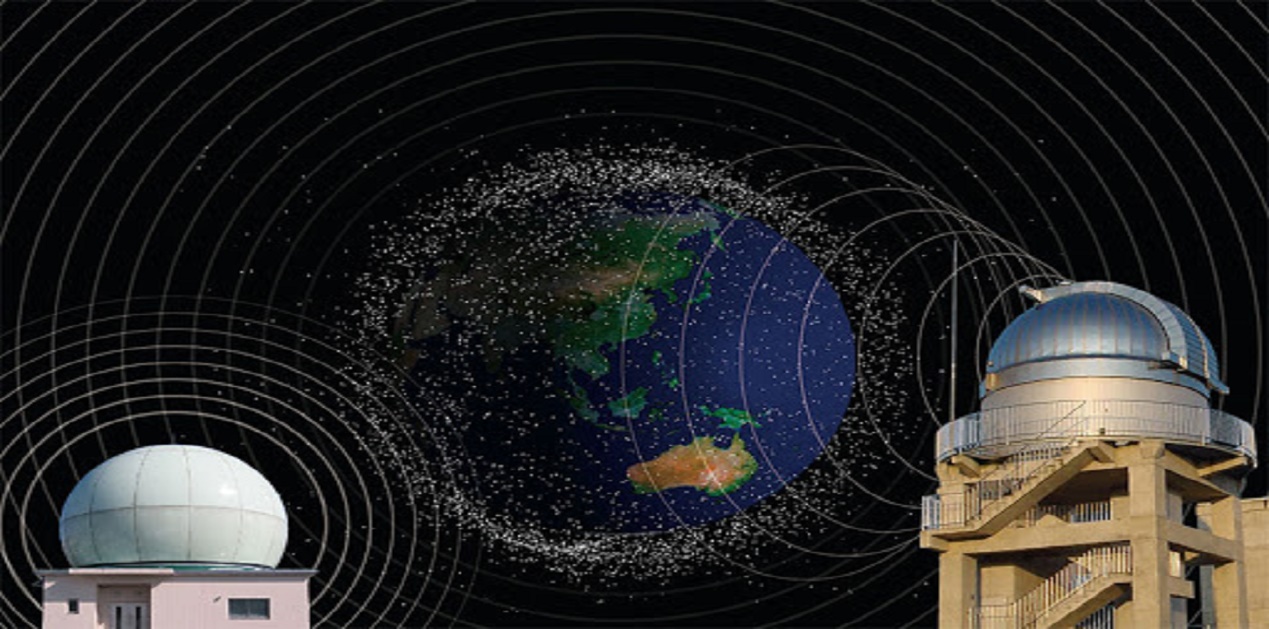
As India’s space ecosystem continues to expand, IN-SPACe is advancing Space Situational Awareness (SSA) and Space Safety and Security guidelines to strengthen the tracking, monitoring, and management of satellites and space objects operating in orbit. The proposed SSA framework is expected to make SSA compliance mandatory for a majority of Indian space activities, encompassing collision avoidance, debris mitigation, tracking, data sharing, audits, and cybersecurity. It also proposes separate authorisation regimes for space-based sensors, ground-based sensors, and SSA service platforms, along with provisions for government access to SSA data at fair market value, including for national and security purposes.
From an industry perspective, the initiative is viewed as a timely and necessary step to enhance orbital safety and long-term sustainability. At the same time, stakeholders have underscored the importance of risk-based regulations, phased implementation, and regulatory clarity on compliance thresholds, data valuation, and timelines to ensure that the framework remains practical and inclusive. Reflecting this view, Anil Prakash, Director General, SIA-India, observed that while larger and more mature operators are relatively well positioned to meet baseline SSA requirements, preparedness varies significantly across the ecosystem, particularly among start-ups and early-stage SSA service providers. SIA-India has reiterated the need for continued industry–government consultation to ensure that the SSA and safety guidelines strengthen space security without inadvertently constraining innovation, competitiveness, or the growth of India’s emerging space enterprises.
To Know more:
|
|
|
Technology and Innovation
|
|
|
|
In-Orbit Plasma Breakthrough Moves Space-Based Semiconductor Manufacturing Closer to Reality
|
|
|
|
|
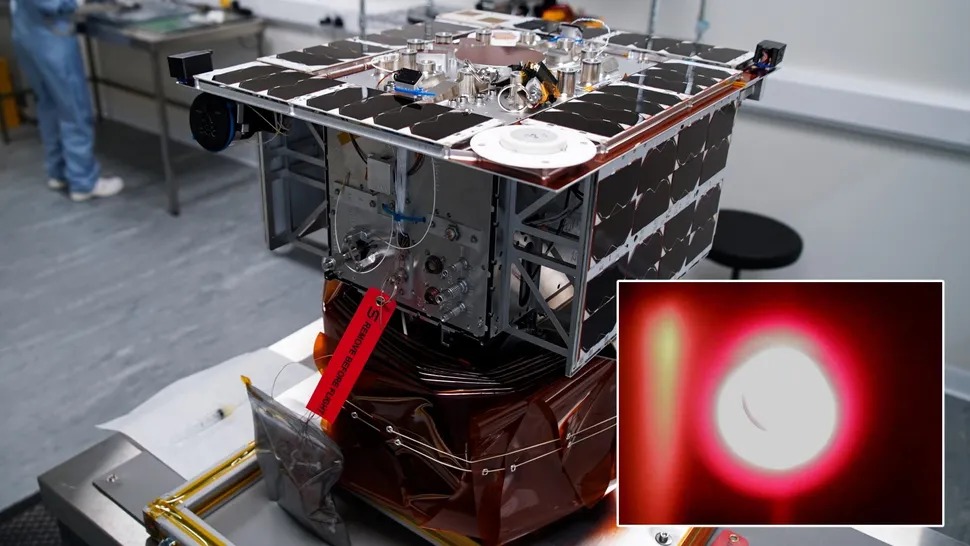
UK aerospace start-up Space Forge has successfully generated and controlled plasma aboard its ForgeStar-1 satellite in low Earth orbit (LEO), a world-first demonstration of a core semiconductor manufacturing process on a free-flying commercial platform. The experiment saw ForgeStar-1 activate its on-board furnace and produce plasma at temperatures approaching 1,000 °C, validating that the extreme, stable conditions required for gas-phase crystal growth, a critical step in semiconductor production an be achieved and autonomously controlled in orbit.
Semiconductor manufacturing on Earth is constrained by gravity-driven convection, contamination, and material defects during crystal growth. In contrast, microgravity and the natural vacuum of space can enable more uniform crystal structures, potentially improving material quality for high-performance applications such as power electronics, telecommunications, and advanced computing.
To Know more:
|
|
|
SIA-India and MERI Sign MoU to Strengthen Space Talent and Policy Ecosystem
|
|
|
|
|
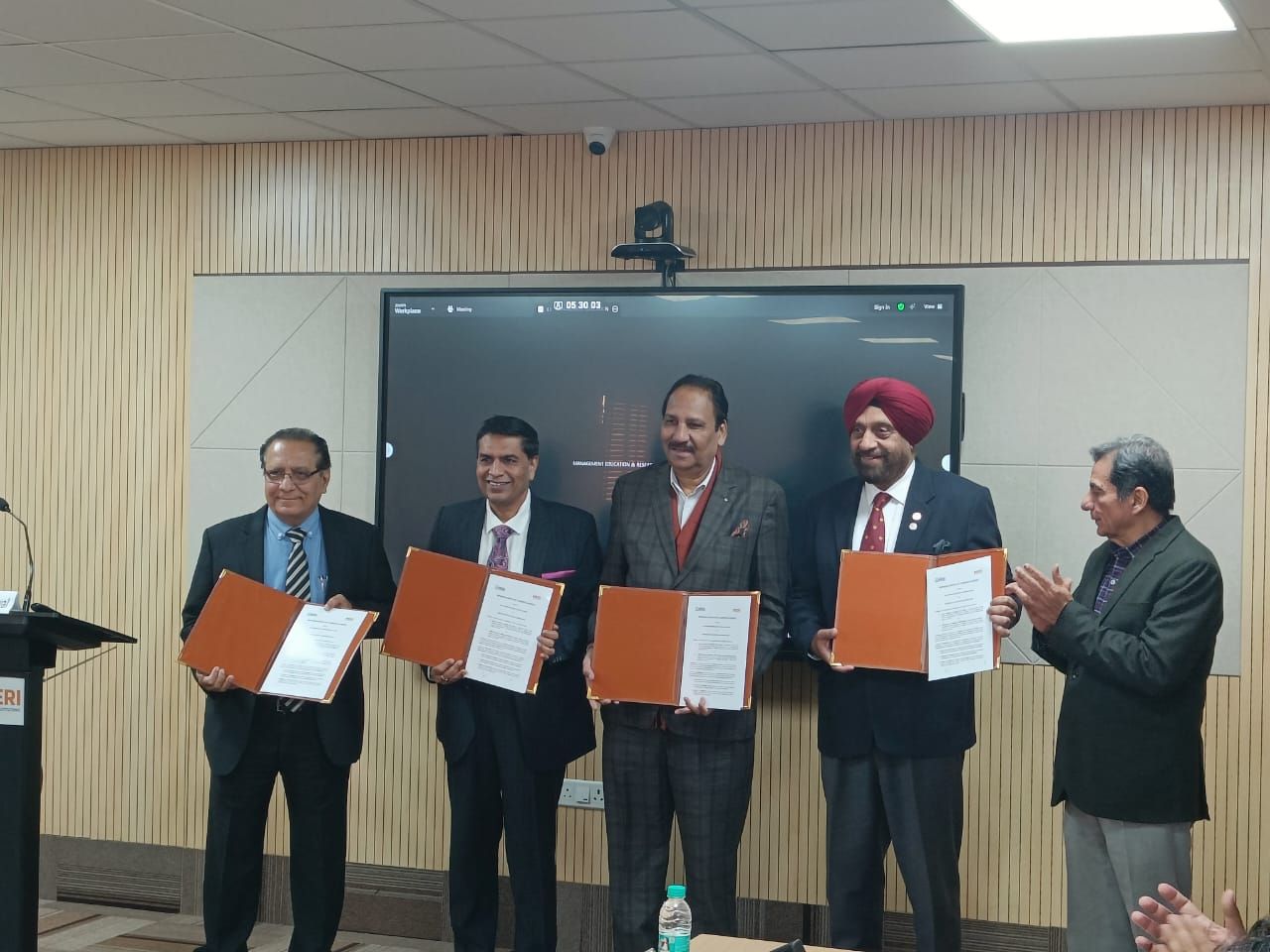
SIA-India has signed a Memorandum of Understanding (MoU) with the Management Education Research Institute(MERI), New Delhi, to deepen collaboration across the space industry, policy ecosystem, and academia, with a shared focus on long-term capacity building.
The partnership aims to bridge industry and academia by aligning education and training with real-world requirements in space and deeptech domains. Key areas of cooperation include joint research on space, deeptech, and related policy issues, training programmes and workshops that connect theory with industry practice, and skilling and certification initiatives aligned with emerging and future industry needs.
The MoU also envisages collaboration on policy engagement and advocacy, enabling informed dialogue between industry, academic institutions, and other stakeholders. Through ecosystem-building initiatives, the partnership seeks to support India’s long-term space and deeptech ambitions by strengthening human capital, institutional knowledge, and policy thinking.
|
|
|
SIA-India and Embassy of Luxembourg Explore Expanded Cooperation in Space Sector
|
|
|
|
|
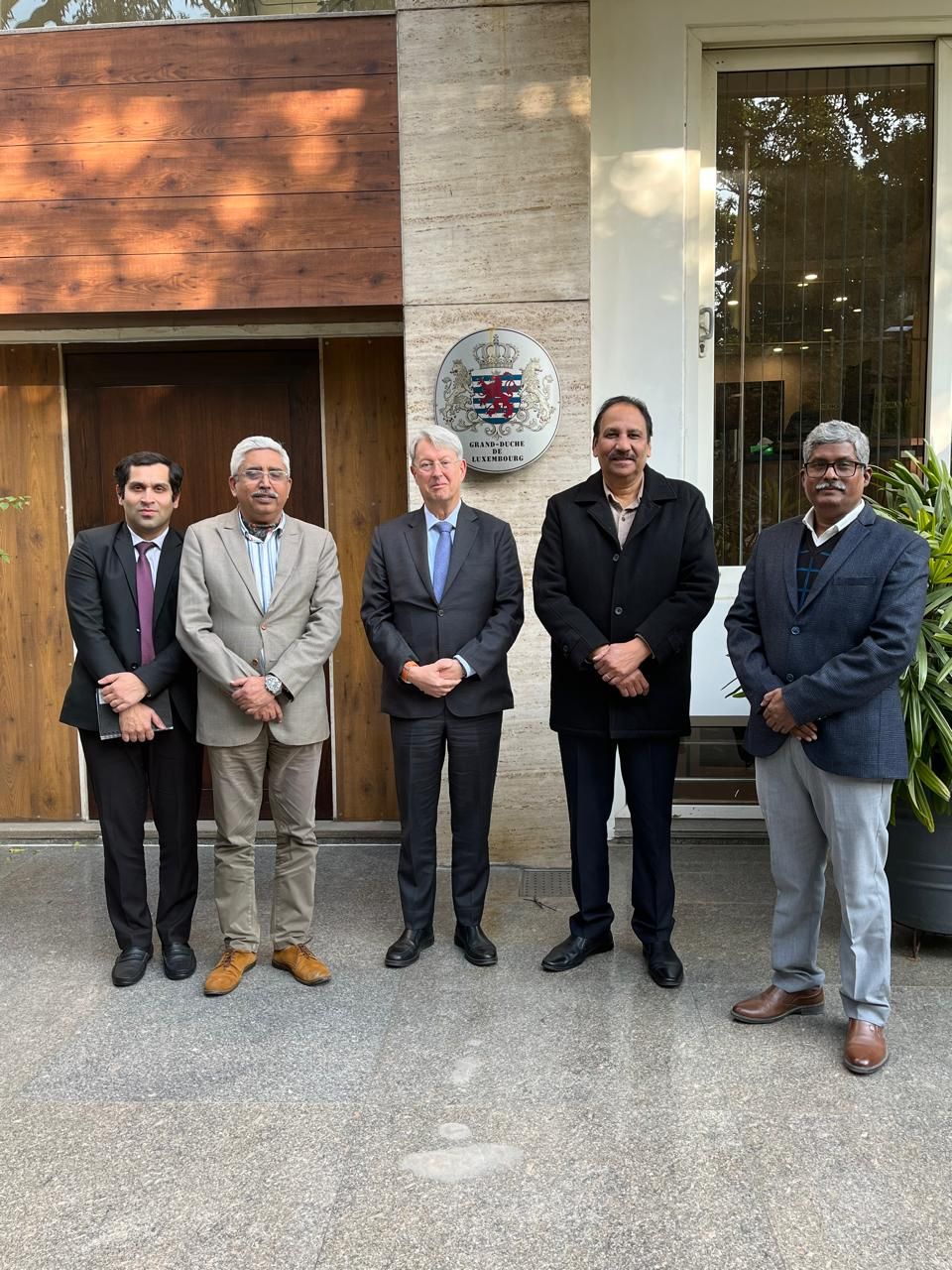
SIA-India held a productive interaction with the Embassy of Luxembourg to explore avenues for strengthening India–Luxembourg collaboration in the space sector, with a focus on academia–industry linkages and institutional cooperation.
The discussions highlighted opportunities for academic collaboration with Luxembourg’s universities and research ecosystem, including potential engagement with SIA-India’s Centres of Excellence in Karnataka, established in partnership with the Government of Karnataka. Both sides also explored Luxembourg’s structured participation at the India Space Congress (ISC) 2026, including the possibility of a Luxembourg Country Session and an India–Luxembourg Space Roundtable.
The engagement reflected a shared interest in deepening bilateral cooperation across academia, industry, and policy, and in building sustained institutional linkages to support innovation, research, and commercial collaboration in the space domain.
|
|
|
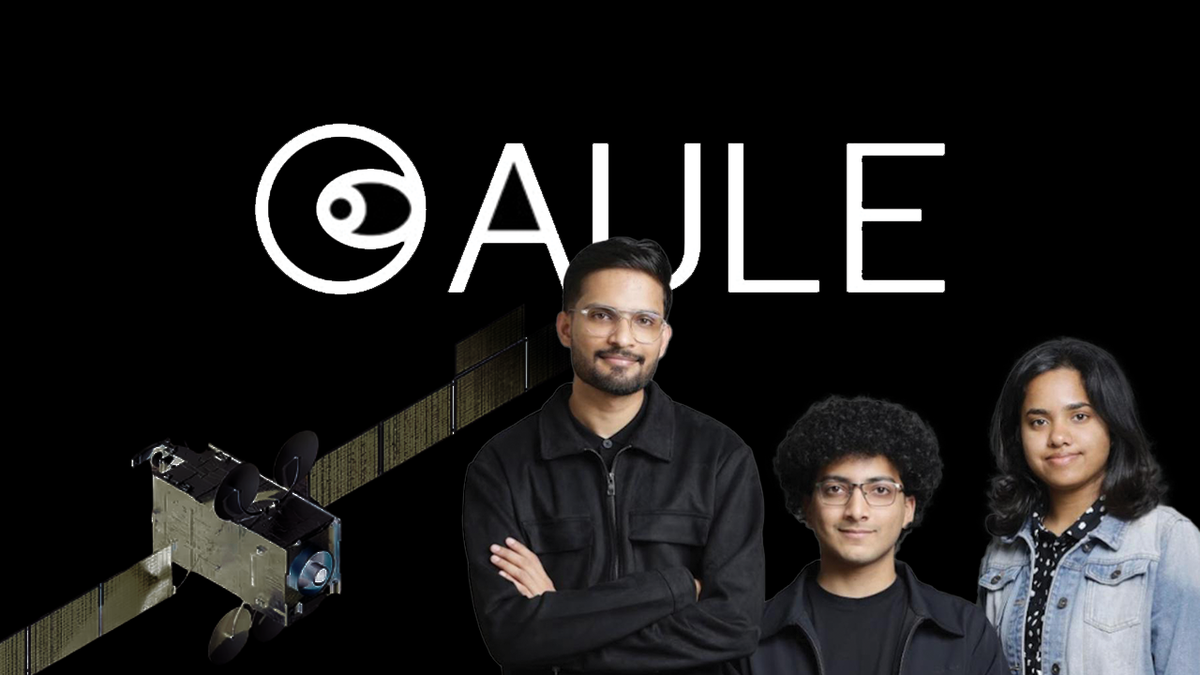
Aule Space Raises USD 2 Million Pre-Seed to Advance In-Orbit Servicing Technologies
|
|
|
|
|
Aule Space, a member of SIA-India, has raised USD 2 million in a pre-seed funding round, led by pi Ventures, with participation from seasoned angel investors including Eash Sundaram and Arvind Lakshmikumar, CEO of Tanbo Imaging. Aule Space is pioneering in-orbit servicing technologies aimed at extending the operational life of high-value satellites, enhancing mission resilience, and contributing to safer and cleaner orbital environments. The funding will support Aule Space’s next phase of growth, including the expansion of its engineering team, development of ground infrastructure for docking tests, and advancement of its first demonstration satellites, scheduled for launch next year. The company will also accelerate the development of autonomous satellite capabilities, focusing on rendezvous, proximity operations, and docking to enable more sustainable space operations. The investment highlights growing confidence in India’s space start-up ecosystem, particularly in on-orbit servicing and space sustainability, which are becoming increasingly critical for the long-term resilience of space operations.
To Know more:
|
|
|
EtherealX Raises USD 20.5 Million Series A to Advance India’s Reusable Launch Vehicle Capabilities
|
|
|
|
|
SIA-India member, Ethereal Exploration Guild (EtherealX) has raised USD 20.5 million (approximately INR 185 crore) in a Series A funding round led by TDK Ventures and Big Think Capital, with participation from Accel, Prosus Ventures, YourNest Venture Capital, Bluehill.VC, Campus Fund, and Riceberg Ventures.
The funding will support EtherealX’s ambitious roadmap to design and test a fully reusable launch vehicle, a critical capability for enhancing cost efficiency and launch responsiveness. Planned milestones include engine hot-fire tests by mid-2026, a technology demonstration flight in late 2027, and the development of booster and upper-stage recovery systems, paving the way for commercial launch missions from 2028 onwards.
The successful Series A round underscores growing investor confidence in India’s private launch ecosystem and highlights EtherealX’s role in advancing indigenous reusable launch technologies, a key enabler for scalable and sustainable access to space.
|
|
|
|
|
As India’s space and defence ecosystems evolve, the need for early, structured engagement between policy, strategic stakeholders, and industry has never been more critical. SIA-India through its flagship event DefSat remains committed to enabling informed dialogue, strengthening indigenous capability creation, and ensuring that industry innovation moves in step with national security and strategic priorities.”
|
Mr Anil Prakash
Director General, SIA-India
|
|
|
|
|
Triple Budgetary Support for Space Sector
|
The Satcom Industry Association of India (SIA-India) has urged the Finance Minister to triple the budgetary allocation for the space sector (from 0.04% to 0.12% of GDP) over three budgets and called for a Hybrid Production-Linked Incentive (PLI) scheme to attract global investment.
|
|
|
|
|
SIA-India Pushes Bold Budget, Hybrid PLI
|
SIA-India also recommended a National Satellite Connectivity Mission backed by the Universal Service Obligation Fund (USOF) for digital inclusion in remote areas, and sought streamlined customs exemptions for critical space hardware.
|
|
|
Other National and International News
|
|
|
|
|
|
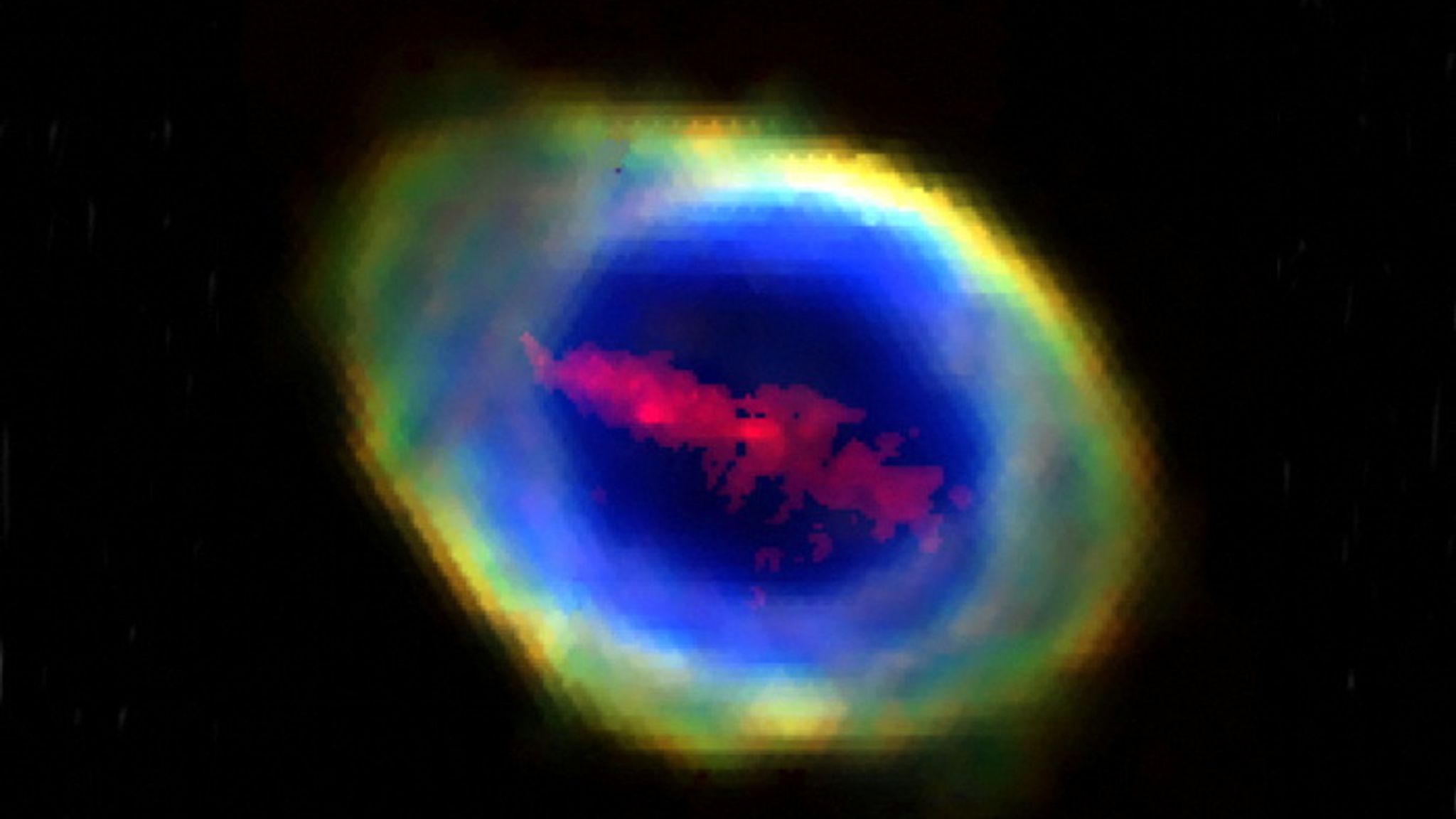
Mysterious 'Iron Bar' Found in Ring Nebula
|
Astronomers using the new WEAVE instrument on the William Herschel Telescope have discovered a massive cloud of iron atoms shaped like a bar stretching 3.7 trillion miles across the Ring Nebula. The feature, composed of ionized iron comparable to the mass of Mars, has baffled scientists as no other elements share this unique distribution. One intriguing theory suggests the bar could be the vaporized remains of a rocky planet destroyed during the star's death—a potential preview of Earth's fate billions of years from now.
|
|
|
|
|
ISRO Faces Crisis After Consecutive PSLV Failures
|
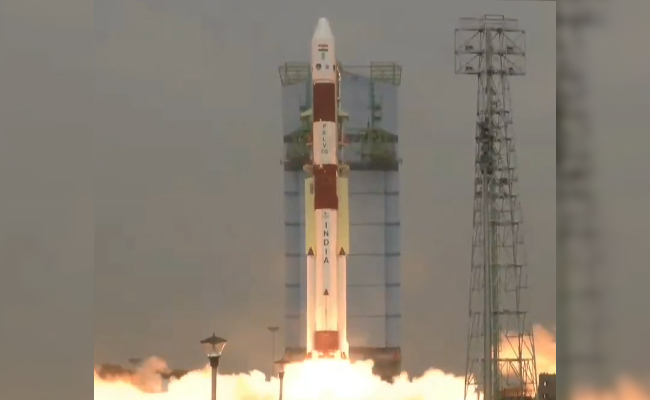
The reliability of ISRO’s "workhorse," the PSLV, is under scrutiny following the failure of the PSLV-C62 mission on January 12, 2026. This marks the second identical third-stage anomaly in eight months, resulting in the loss of the EOS-N1 satellite and several international payloads. Experts warn that these setbacks could delay the planned handover of PSLV operations to private industry and impact India’s standing in the competitive global small-satellite launch market.
|
|
|
|
|
|
|
|
|
|
For further information, please contact us at:
|
|
|
|
|
|
|
|
|
|
|