Click Here to View online version
|
|
|
SIA-India Newsletter – December 2025 Special Edition
|
|
|
PM GatiShakti Workshop Opens New Opportunities for Industry-Led Infrastructure Planning
|
|
|
|
|
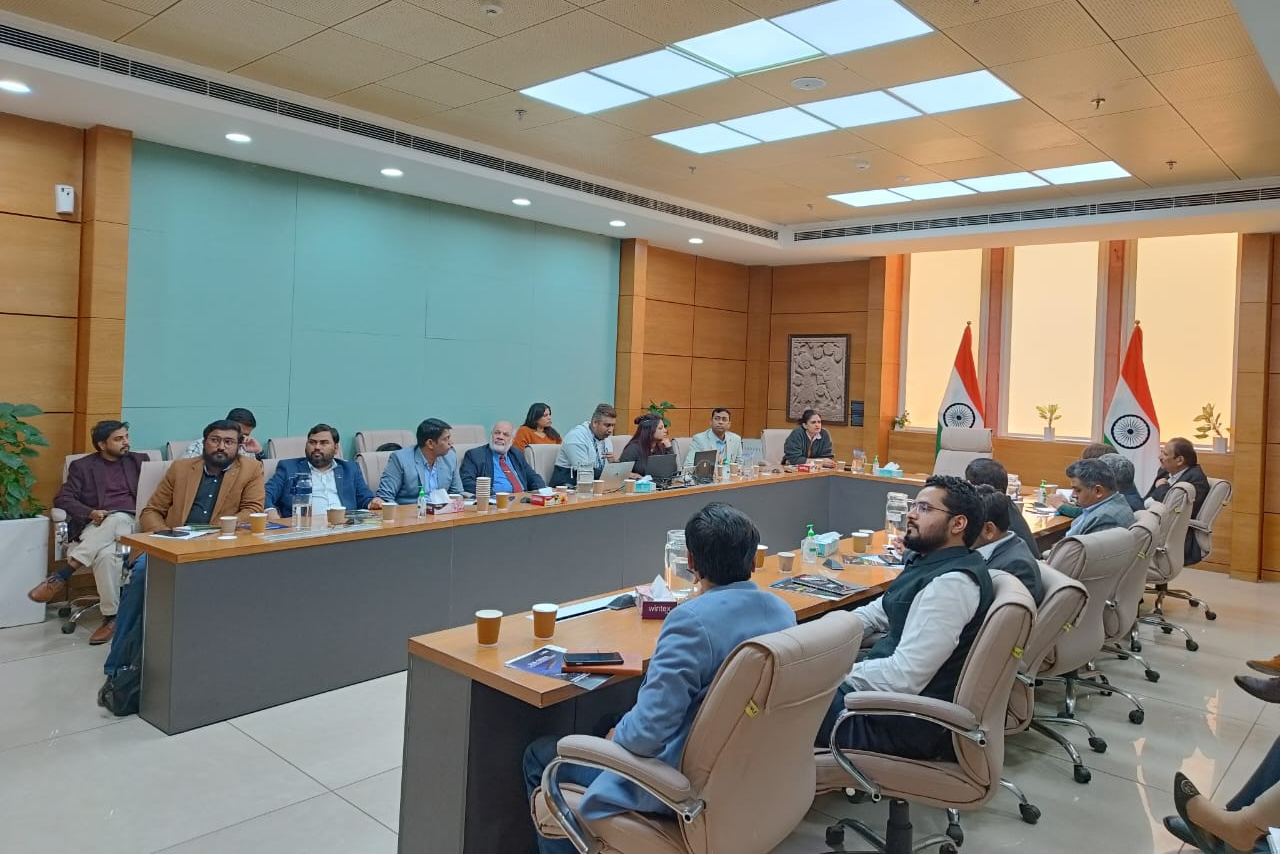
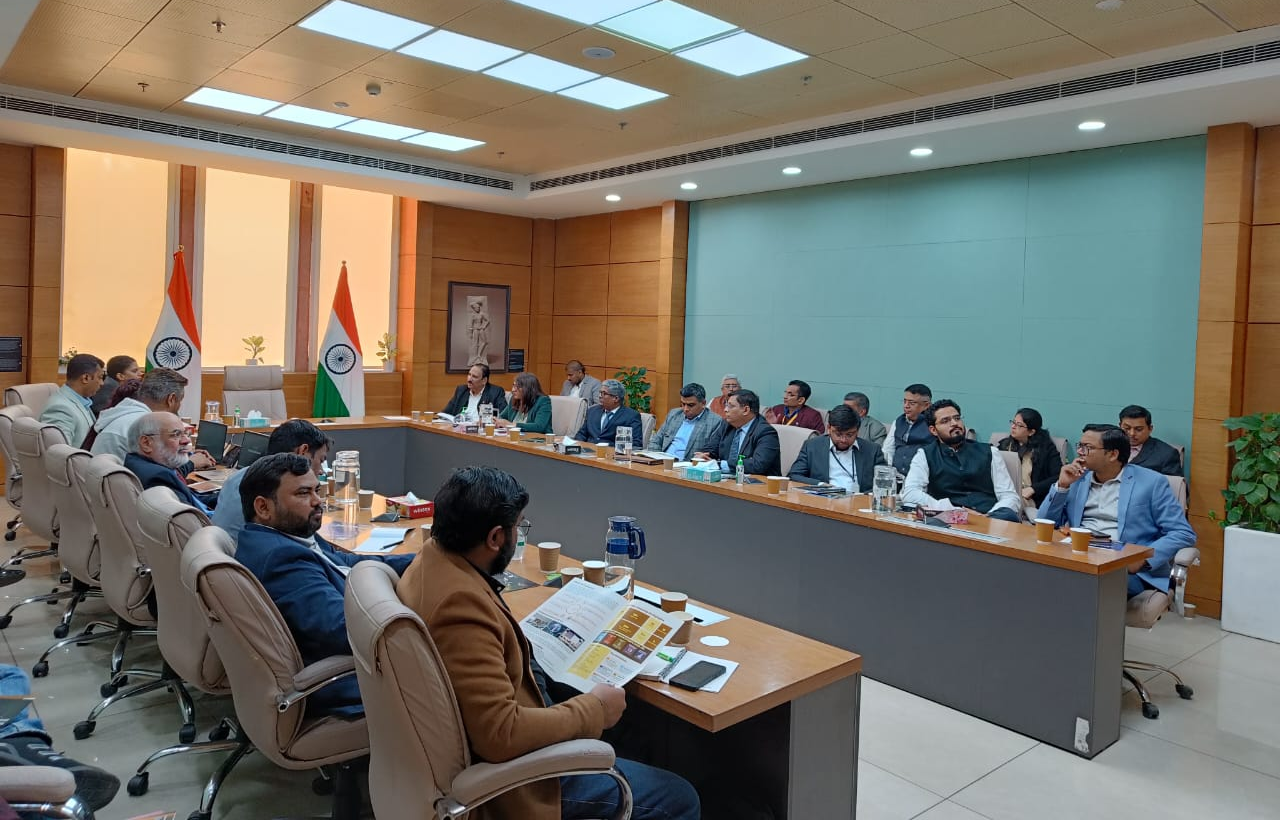
SIA-India, in collaboration with the Department for Promotion of Industry and Internal Trade (DPIIT) and Bhaskaracharya Institute for Space Applications and Geo-Informatics (BISAG-N), successfully concluded the Space Industry Workshop: Harnessing the Power of PM GatiShakti, marking an important milestone in advancing industry engagement with India’s national geospatial infrastructure.
The workshop provided industry, start-ups, and academia with first-hand exposure to the PM GatiShakti Public Platform, enabling participants to understand how ministry-verified geospatial datasets can be leveraged for infrastructure planning, analytics, and decision-support. Through live demonstrations and technical walkthroughs, participants explored site suitability analysis, linear infrastructure alignment, regulatory overlays, and query-based planning tools supported by authoritative government data.
Discussions highlighted the platform’s potential to reduce planning uncertainty, improve regulatory predictability, and strengthen evidence-based infrastructure decision-making across sectors such as logistics, energy, mobility, utilities, and environmental management. The workshop underscored the growing role of public–private collaboration in India’s geospatial ecosystem, positioning PM GatiShakti as a foundational digital public infrastructure for coordinated planning. SIA-India will continue to facilitate structured feedback from industry and support ongoing engagement with DPIIT and BISAG-N to ensure the platform evolves in alignment with operational needs and national development priorities.
|
|
|
Strengthening Supply Chain Resilience: SIA-India Advances Sector Inputs to DPIIT
|
|
|
|
|
SIA-India continues to work closely with DPIIT and allied government stakeholders to support the development of a national framework for supply chain resilience across strategic and emerging sectors. As part of this ongoing policy engagement, the focus is on identifying critical dependencies, technology gaps, and concentration risks that impact India’s long-term industrial and economic security.
Recognising that existing trade and classification systems offer limited visibility for space and deep-tech supply chains, SIA-India has prepared a sector-specific questionnaire to capture aggregated, anonymised industry insights. The questionnaire is designed to reflect operational realities such as import reliance for space-grade components, technology transfer constraints, export control limitations, and barriers to domestic manufacturing scale-up, without requiring firm-level disclosures.
Inputs consolidated through this exercise will inform DPIIT’s policy thinking on targeted interventions, including localisation strategies, technology partnerships, and ecosystem development measures. SIA-India encourages its members and industry stakeholders to actively participate in the questionnaire to ensure that the space and deep-tech sector’s perspectives are accurately represented in national supply chain resilience planning.
Participate in the questionnaire:
|
|
|
Safeguarding X-Band: SIA-India Calls for Protection of Critical Earth Observation Spectrum at WRC-27
|
|
|
|
|
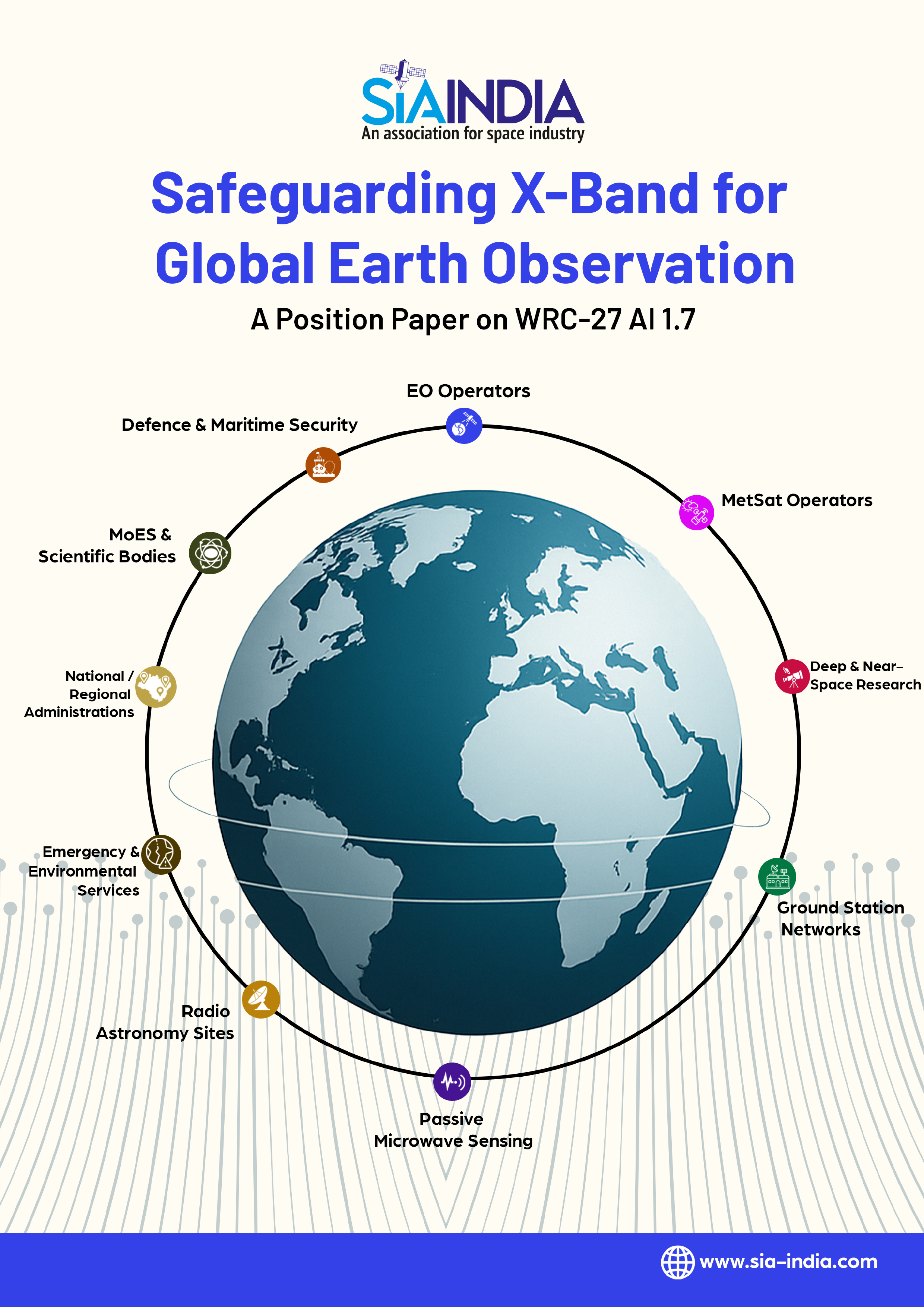
SIA-India has released a comprehensive Position Paper on WRC-27 Agenda Item 1.7, underscoring the strategic and scientific importance of the X-Band (7,125–8,400 MHz) for Earth Observation (EO), meteorological, space research, and national security applications.
The paper highlights that X-Band serves as the primary wideband downlink for EO and meteorological satellites, enabling high-volume transmission of climate, weather, disaster management, and environmental data. These services underpin global initiatives such as the WMO Integrated Global Observing System (WIGOS) and the UN’s “Early Warnings for All” programme, with no viable global alternative spectrum available for migration.
In the context of WRC-27, Agenda Item 1.7 proposes studies on potential identification of parts of the X-Band for International Mobile Telecommunications (IMT). SIA-India cautions that sharing between IMT and incumbent satellite services is technically impractical, with studies indicating a high risk of harmful interference to sensitive satellite earth stations, disruption of long-term climate records, and constraints on current and future EO missions.
SIA-India firmly recommends retaining full regulatory protection of X-Band allocations for Earth Exploration-Satellite Service (EESS), Meteorological Satellite Service (MetSat), Space Research Service (SRS), passive sensing, and associated ground infrastructure. The paper calls for coordinated national and regional engagement in the WRC-27 preparatory process to ensure India’s position reflects operational realities and safeguards critical space-enabled services vital for climate resilience, disaster preparedness, defence, and sustainable development.
Read the Report:
|
|
|
DefSat Precursor Roundtable Advances Dialogue on India’s Defence Space Roadmap
|
|
|
|
|
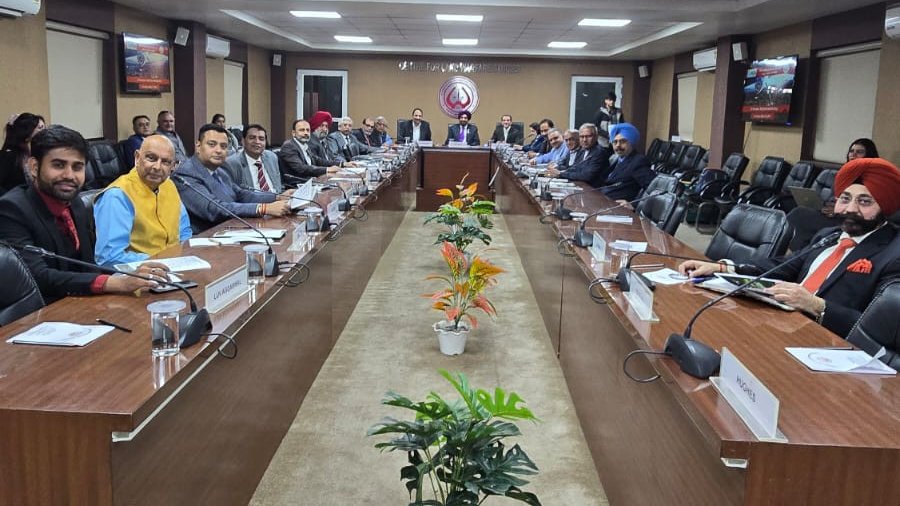
SIA-India, in collaboration with the Centre for Land Warfare Studies (CLAWS), convened the second DefSat Precursor Roundtable as part of a structured series shaping the agenda for DefSat 2026. The dialogue focused on identifying capability gaps, readiness shortfalls, and priority interventions required to strengthen India’s defence space posture in an increasingly contested and congested operational environment.
Discussions moved decisively beyond satellites as standalone assets and underscored the need to treat space as critical national infrastructure and a system-of-systems, integrating space, cyber, electronic warfare, spectrum management, ground infrastructure, and data-processing architectures. The roundtable also examined challenges in mission assurance, interoperability, and command-and-control integration, stressing that future conflicts will demand seamless coordination across domains rather than platform-centric solutions. There was strong consensus on the need for structured defence–industry–research collaboration to bridge gaps between user requirements, technology development, and deployable capability, particularly through realistic mission scenarios, clearer articulation of operational use cases, and aligned technology roadmaps. The discussions reinforced DefSat’s role as a platform not only for dialogue, but for translating strategic intent into operational readiness through sustained engagement across government, industry, and the research community.
This roundtable marked the second iteration in the DefSat precursor series and directly informed the subsequent DefSat 2026 Industry Orientation Meet, which translated strategic insights into clear engagement and delivery pathways for industry.
|
|
|
DefSAT 2026 Industry Orientation Meet Aligns Industry for Mission-Ready Outcomes
|
|
|
|
|
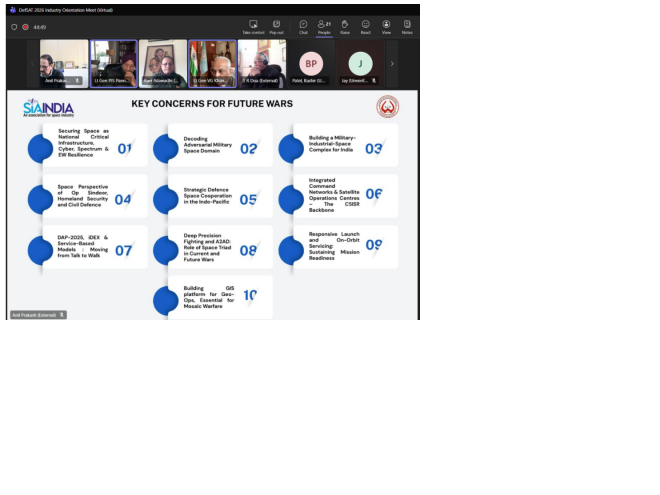
SIA-India successfully convened the DefSAT 2026 Industry Orientation Meet, bringing together defence and space industry stakeholders to align expectations and outline meaningful pathways for engagement ahead of DefSAT 2026.
The interaction focused on positioning DefSAT as a platform that moves from dialogue to delivery, encouraging industry participants to go beyond generic capability narratives and present packaged, mission-aligned solutions. Discussions emphasised the importance of clearly articulating what can be delivered individually and collectively, demonstrating deployable capabilities aligned with Atmanirbhar Bharat, and using DefSAT to identify and address real defence–space capability gaps through structured government–industry convergence.
The meet also provided clarity on DefSAT 2026’s thematic priorities, including Space Domain Awareness (SDA), C5ISR, secure satellite communications, cyber and electronic warfare resilience, geo-operations, mission assurance, and the IndSpaceX 4.0 operational wargame, setting the tone for focused, outcome-oriented participation at the conference scheduled for 24–26 February 2026 in New Delhi.
|
|
|
Technology and Innovation
|
|
|
|
BlueBird Block-2 Launch Positions India as a Credible Commercial LEO Deployment Partner
|
|
|
|
|
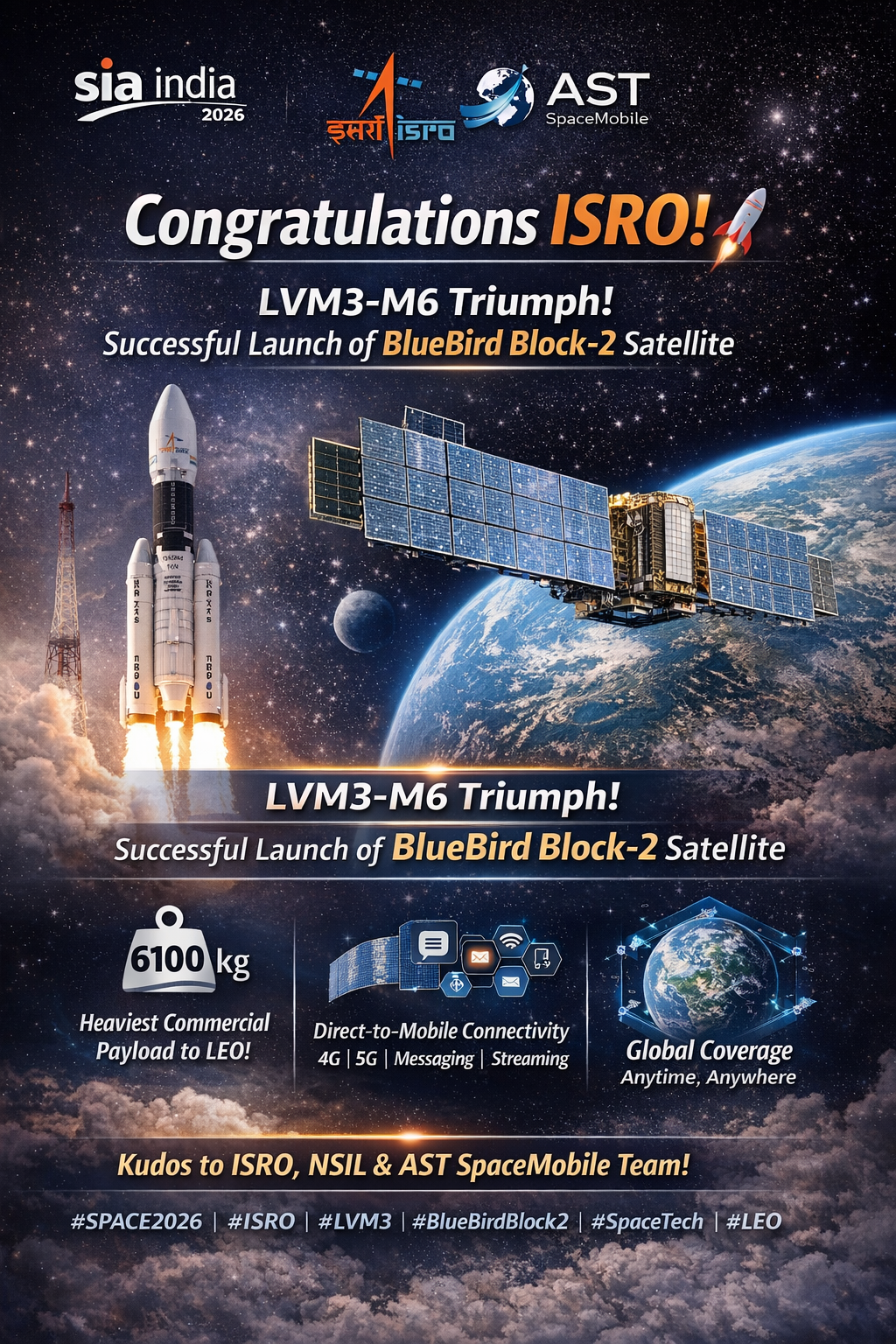
ISRO’s successful launch of the BlueBird Block-2 satellite aboard LVM3-M6, carrying the heaviest commercial satellite deployed by an Indian launcher to date, marks a significant milestone for India’s space sector. The mission demonstrates India’s growing capability to support heavy-class low Earth orbit (LEO) deployments for next-generation satellite communications systems.
Beyond mission success, the launch signals India’s emergence as a reliable global deployment platform, aligned with the Viksit Bharat vision of positioning the country as a launchpad for the world. The ability to support high-value international missions alongside domestic programmes strengthens the credibility, cadence, and technological maturity of India’s own space missions.
The milestone also highlights the expanding role of India’s private space industry. Heavy commercial launches require advanced manufacturing, systems integration, testing, and operational readiness—driving deeper B2B and B2G collaboration as Indian companies engage with global operators and government programmes as long-term partners.
As satellite–terrestrial integration advances and multi-orbit (LEO–MEO–GEO) systems move toward operational networks, this mission reinforces India’s positioning as a neutral, commercially credible partner across the full satellite lifecycle, from launch and manufacturing to ground systems and network operations.
|
|
|
ISRO Gears Up to Close 2025 with Three Major Missions
|
|
|
|
|
As 2025 draws to a close, the Indian Space Research Organisation (ISRO) is preparing to execute a trio of significant space missions, capping the year with strong scientific and strategic momentum. The sequence includes the successful LVM3-M5 mission, which placed the CMS-03 (GSAT-7R) communication satellite into orbit, enhancing India’s maritime and defence communications capabilities. Building on this, ISRO is set to undertake additional launches using both its heavy-lift LVM3 and PSLV launch vehicles, demonstrating the agency’s versatility and operational depth. Among the year-end missions is the PSLV-C62 launch, expected to deploy a constellation of imaging and strategic payloads, further expanding India’s space utilisation footprint. Together, these missions reflect ISRO’s growing momentum in operational and commercial space activities, reinforcing India’s position as a reliable launch provider and an advancing space power as 2025 concludes.
|
|
|
Advancing Industry Perspectives in India’s ITU PP-26 Preparations
|
|
|
|
|
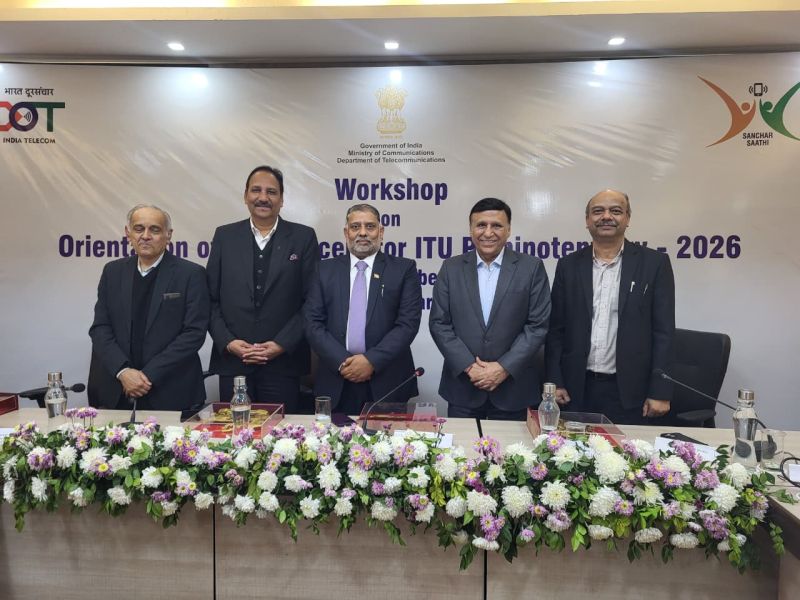
Mr. Anil Prakash, Director General, SIA-India, delivered a keynote address at the Department of Telecommunications (DoT), Haryana LSA – ITU PP-26 Engagement & Orientation Programme, outlining India’s coordinated approach towards preparations for the ITU Plenipotentiary Conference 2026 (PP-26).
In his address, he highlighted key industry expectations, the importance of policy coherence across satellite and terrestrial networks, and SIA-India’s Partner2Connect pledge. He also emphasised the proposed National Satellite Connectivity Mission aimed at bridging connectivity gaps across approximately 40,000 connectivity-fragile Gram Panchayats, underscoring India’s expanding leadership role in global telecom governance.
|
|
|
SIA-India Highlights Indo–Australian Space & Defence Collaboration at Business Summit 2025
|
|
|
|
|
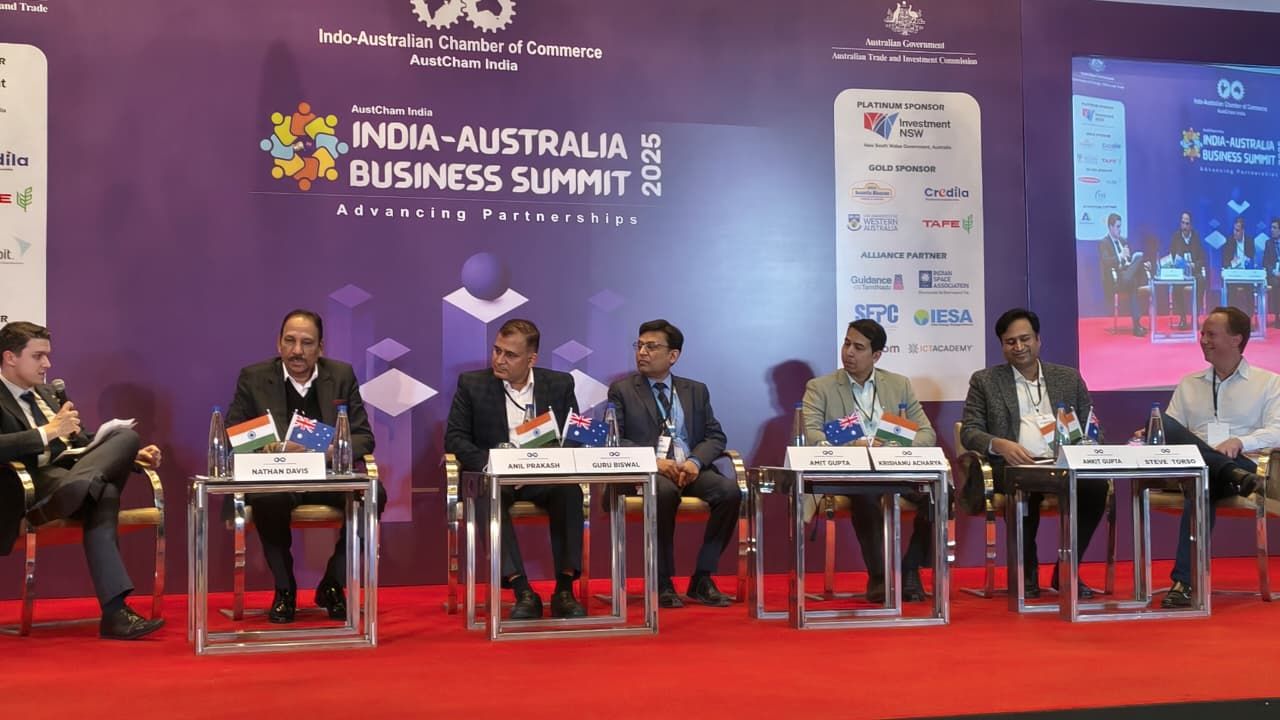
SIA-India participated in the Auscham India | India–Australia Business Summit 2025, where its Director General, Mr. Anil Prakash, joined a dedicated session on “Space & Defence: Building Indo–Australian Collaborations.”
The discussion underscored the growing momentum in India–Australia space and defence cooperation, driven by shared strategic interests, complementary technological strengths, and an expanding private-sector ecosystem. Key areas of collaboration highlighted included Space Situational Awareness (SSA), Earth Observation, climate monitoring, and hosted payload missions, combining India’s spacecraft and launch capabilities with Australia’s advanced ground infrastructure. The engagement reaffirmed the role of industry-led partnerships, harmonised regulatory frameworks, and joint technological ambition in shaping a resilient, secure, and innovation-driven Indo-Pacific space ecosystem.
|
|
|
SIA-India Welcomes GRAVITON SPACE as New Member
|
|
|
|
|
SIA-India is pleased to welcome GRAVITON SPACE as a new member of the association. GRAVITON SPACE specialises in highly configurable, software-defined space platform solutions, enabling faster, cost-effective, and reliable space missions.
With a strong focus on transforming space assets into reconfigurable and intelligent software-driven systems, GRAVITON SPACE represents a new generation of agile and future-ready space technologies. The company’s mission closely aligns with SIA-India’s objectives of promoting innovation, indigenisation, and global competitiveness within India’s space ecosystem.
SIA-India looks forward to collaborating with GRAVITON SPACE to strengthen industry capabilities and contribute to the long-term growth and resilience of India’s space sector.
|
|
|
OrbitAID Aerospace Wins HDFC Bank Tech Innovators Award 2025
|
|
|
|
|
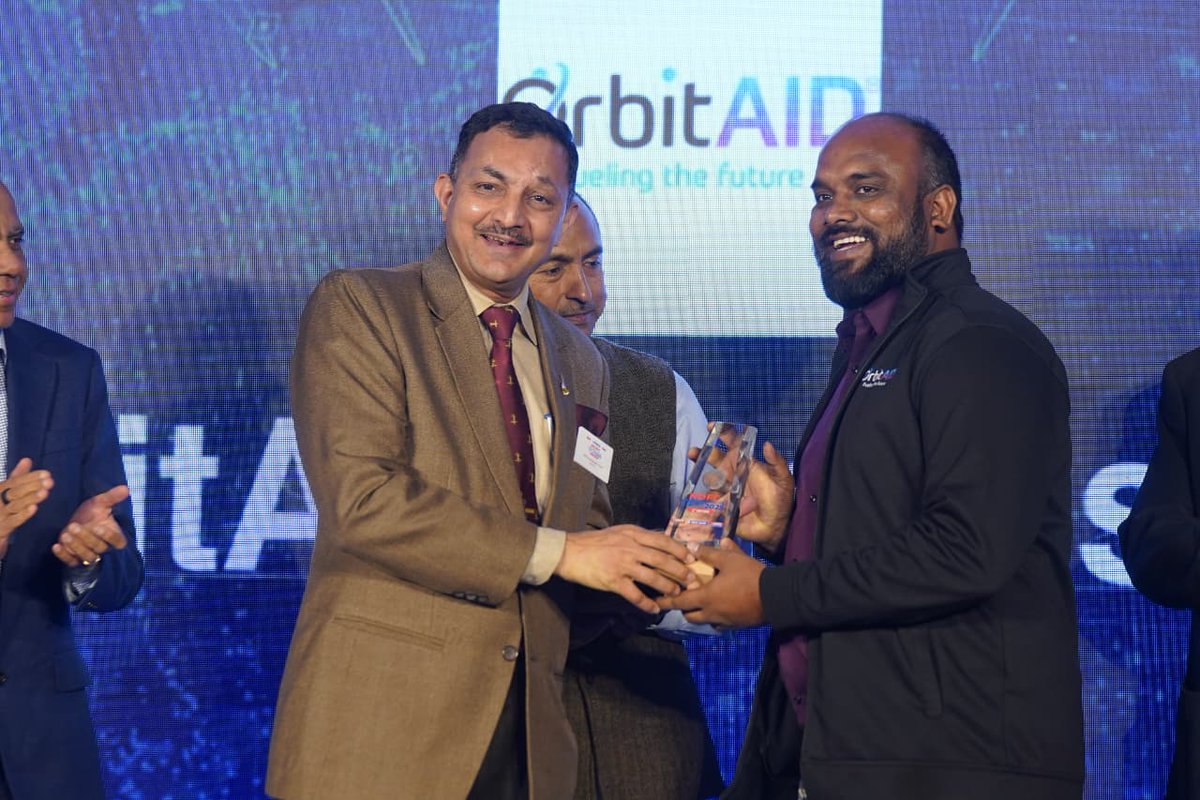
SIA-India congratulates its member OrbitAID Aerospace on being recognised as the winner in the Space Technology category at the HDFC Bank Tech Innovators Awards 2025, selected from over 1,600 applications across deep-tech and frontier-technology domains.
The award acknowledges OrbitAID Aerospace’s pioneering work in on-orbit servicing and orbital refuelling, positioning it as the first Indian company to advance indigenous solutions in this critical domain. The recognition underscores the growing importance of space sustainability, debris mitigation, and in-orbit servicing for future space missions.
OrbitAID’s achievement reflects the strength of India’s emerging space start-up ecosystem and its ability to deliver world-class, globally relevant technologies from India.
|
|
|
ReOrbit, a Finnish start-up has been named EY Start-Up of the Year 2025
|
|
|
|
|
SIA-India congratulates its esteemed member ReOrbit and its founders, Sethu Saveda Suvanam and Mina Rajabi, on being awarded the EY Start-Up of the Year 2025.
This prestigious recognition highlights ReOrbit’s pioneering contributions to intelligent, software-defined satellite architectures and its role in enabling next-generation in-orbit connectivity. The achievement reflects the growing global impact of India-linked space enterprises and reinforces the strength of innovation emerging from the space technology ecosystem.
|
|
|
Industry & Ecosystem Recognitions
|
|
|
|
Prof. Zaffar Sadiq Mohamed-Ghouse Honoured at National Geospatial Awards 2025
|
|
|
|
|
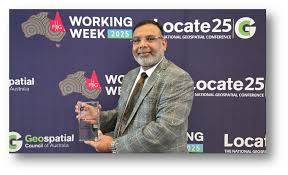
Prof. Zaffar Sadiq Mohamed-Ghouse has been conferred the National Geospatial Professional Fellow (OCI/NRI) Award at the National Geospatial Awards 2025 (Edition 02), recognising his exceptional leadership, academic excellence, and sustained contributions to the global geospatial and GIS ecosystem.
Currently serving as Board Director at the Open Geospatial Consortium (OGC) and Vice President & Director – Advisory and Innovations at Woolpert, Australia, Prof. Mohamed-Ghouse has played a pivotal role in advancing geospatial standards, innovation, and international collaboration.
The National Geospatial Awards 2025 (Edition 02) is an initiative of the FOSSEE GIS Project, IIT Bombay, organised under the aegis of the National Mission on Education through ICT (NMEICT), Ministry of Education, Government of India, celebrating excellence and impact in the geospatial domain.
|
|
|
|
|
“2025 has been a defining year for India’s space ecosystem, marked by technological maturity, operational depth, and growing global leadership. At SIA-India, we have worked closely with government, industry, and global partners to translate this momentum into tangible outcomes through policy advocacy and structured engagement. In 2026, our focus will be on strengthening defence–space integration, satellite-led connectivity, and positioning Indian companies as globally competitive contributors.”
|
Mr Anil Prakash
Director General, SIA-India
|
|
|
|
|
SIA-India Budget Wishlist: Hybrid PLI & Infrastructure Status
|
SIA-India (with KPMG) has submitted its 2026-27 budget recommendations, seeking "Critical Infrastructure" status for space, dedicated HSN/SAC codes for space-grade components, and clean-room inspection zones at ports to prevent hardware damage.
|
|
|
|
|
LVM3-M6: India Launches Heaviest Satellite Ever
|
In a historic milestone, ISRO’s 'Bahubali' (LVM3) successfully placed the 6,100 kg BlueBird Block-2 (USA) into orbit. This marks India’s heaviest launch to date, demonstrating a capacity to support global direct-to-smartphone connectivity constellations.
|
|
|
Other National and International News
|
|
|
|
|
|
ISRO Exhibition Draws High Turnout
|
A 3-day Vikram Sarabhai Space Exhibition by ISRO at Rajasthan Technical University, Kota, featuring models of Chandrayaan and Mangalyaan, saw a large turnout of students, showcasing India's space capabilities.
|
|
|
|
|
Defence Stocks Outlook Strong (HAL, BDL, BEL)
|
Brokerage firms maintain a strong outlook on key defence stocks like HAL, BDL, and BEL due to a healthy order book, accelerated indigenous programs (e.g., LCA Mk1A, QRSAM), and positive management commentary on improved ordering in H2FY26 and strong export potential.
|
|
|
|
|
|
|
|
|
|
For further information, please contact us at:
|
|
|
|
|
|
|
|
|
|
|